

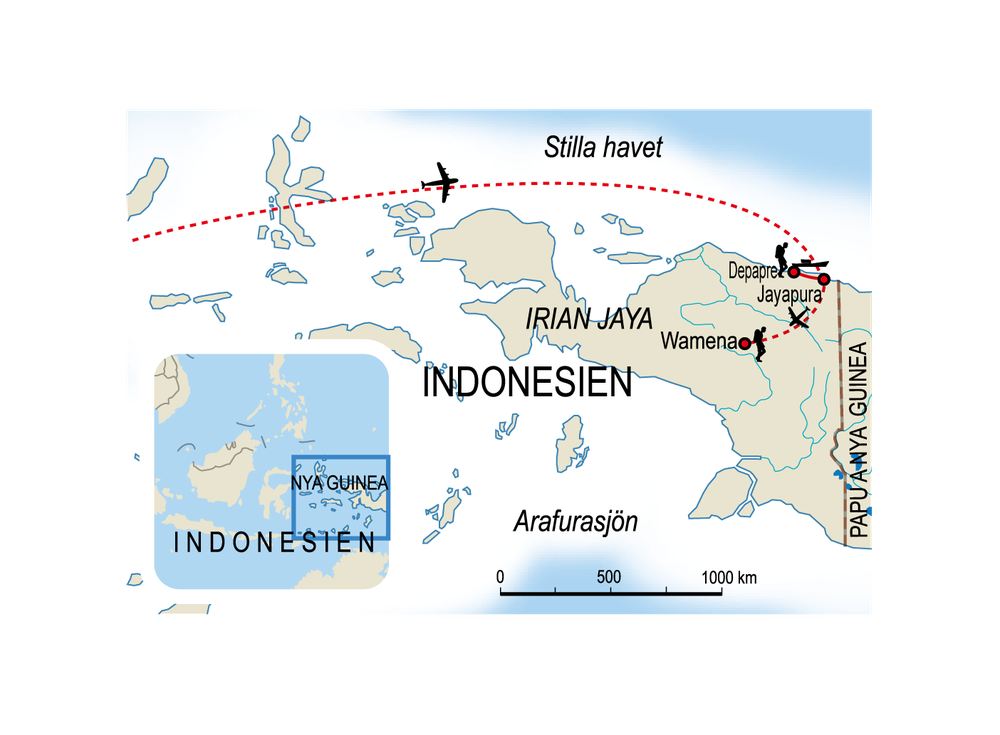
Resan går till provinsen Väst-Papua som har varit en del av Indonesien sedan 1968. Du ger dig ut på vandring i regnskog, du bor i en by på en ö i Sentanisjön, bor i bivack på en öde strand och framförallt får du närkontakt med danifolket under fyra dagars vandring i höglandet.
Resedetaljer
| Dag | Program |
|---|---|
| 1-2 | Ankomst Jayapura |
| 3 | Genom odlingar och savann till regnskog |
| 4-5 | Läger inne i regnskogen |
| 6-8 | Tillbaks till Sentanisjön |
| 9 | Flyg till Wamena |
| 10-13 | Vandring i Baliemdalen |
| 14 | Krigsspel och traditionell fest |
| 15 | Båt till en liten ö där du bor i byn |
| 16-18 | Bad och snorkling över fina korallrev |
| 19-20 | Sentani |
Särskilt för resan till Nya Guinea
Mat ingår under under vandringarna, när du bor i familjer och tältar på stranden. Tillsammans ca 14 dagar. Du får kokt vatten att hälla på din vattenflaska.
- Internationellt flyg till/från resmålet
- Måltider som ej nämns ovan
- Utflykter och aktiviteter utanför resplanen
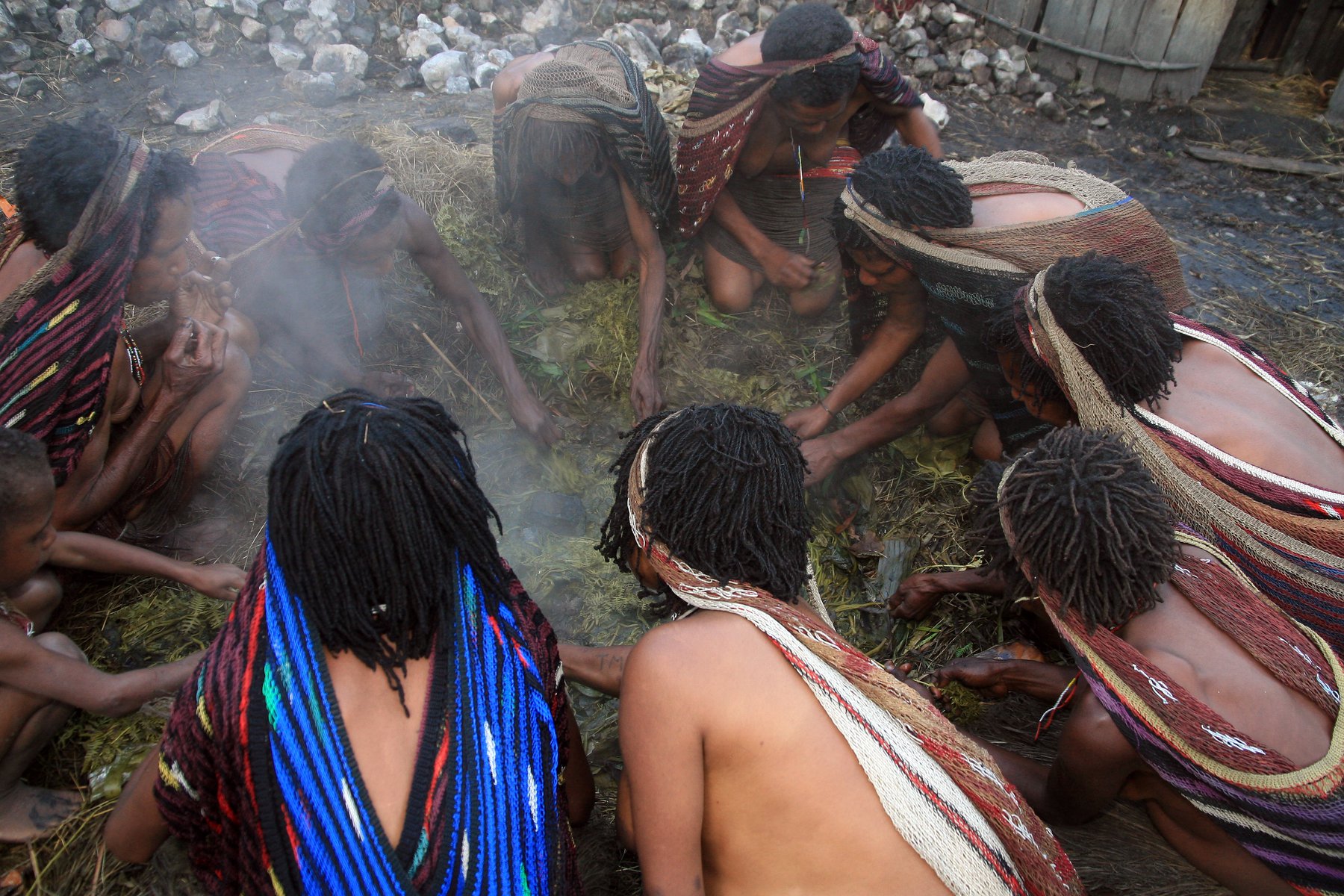
Kvinnorna tillagar gris och grönsakerr i en jordugn med heta stenar
Dag 1-2 Ankomst Jayapura
Samling på vårt hotell på gångavstånd från flygplatsen iSentani. Vila ut efter flygresan och upptäck staden Jayapura.
Dag 3 Genom odlingar och savann till regnskog
Båt över Sentanisjön till en by där bärarna väntar ochvandringen börjar. Du kommer att gå i ca 4 timmar och passerargenom odlingar med sötpotatis och kassava därefter över öppensavann till slut når du skogen. Här hjälper du till att bygga enbivack där du skall bo i tre nätter.
Dag 4-5 Läger inne i regnskogen
Dagarna ägnas åt utflykter. Här finns paradisfågel,näshornsfågel, hjortar och vildsvin. I mörkret gör du en utflyktoch letar efter nattaktiva djur, framför allt trädkänguru. Bärarnaberättar om hur de hittar mat och läkemedel i skogen när de självaär ute. Otroligt spännande med alla dessa livsformer. Du har godachanser att både se och höra den legendariska paradisfågeln. Iområdet finns två arter. Om du vill kan du följa med på jakt påkasuar och trädkänguru på traditionellt vis.
Dag 6-8 Tillbaks till Sentanisjön
Idag bryter du upp och lämnar lägret och vandrar tillbaks motbebodda trakter. Vid Sentanisjön tar du en båt och åker till bynPutaly som ligger på en ö i sjön. Här bor du hos en familj i bynunder två nätter. Byn är berömd för sitt fina hantverk, specielltde vackra målningarna på bark. Här lever man huvudsakligen på fiskeoch du är välkommen att följa med ut på Sentani-sjön. Kanske får duse krokodiler.Dag 8 åker vi båt över sjön tillbaka till vårt hotell i Sentani.Eftermiddagen är fri för egna aktiviteter.
Dag 9 Flyg till Wamena
Morgonflyg upp till högländerna. Du kommer till Wamena ärhuvudort i Baliemdalen och ligger på 1600 meters höjd. Staden ärliten och du kan upptäcka den på egen hand.
Dag 10-13 Vandring i Baliemdalen
Under fyra dagar vandrar du mellan byar i Baliemdalen med lokalaguider. Du övernattar i byar på lokala villkor. Landskapet ärrejält kuperat och oerhört vackert. Räkna med många spännande mötenmed människor under de här dagarna. Kontrasten mot det omgivandesamhället är slående och hoten mot det traditionella levnadssättetär många. Här lever Dani-folket, där äldre män fortfarande klär sigendast i koteka, penisfodral. Dag 13 återvänder du tillWamena.
Dag 14 Krigsspel och traditionell fest
I en Dani-by deltar du i en traditionell ceremoni med ettrealistiskt krigsspel. Nu får du se hur kvinnorna lagar maten ijordugn, upphettade stenar som täcks med blad och jord, heltutan kokkärl. Naturligtvis får du smaka.
Dag 15 Båt till en liten ö där du bor i byn
Morgonflyg till Jayapura. Från flygplatsen åker du bil till denlilla staden Depapre. Härifrån åker du båt till en by vid havet därdu övernattar i ett hus på pålar i vattnet.
Dag 16-18 Bad och snorkling över fina korallrev
Under tre nätter kommer du att bo på stranden. Här kan dusnorkla bland korallrev, fiska eller bara njuta av de paradisiskaomgivningarna.
Dag 19-20 Sentani
Återfärd till Sentani. Du kan besöka byarna vid Sentanisjön ochhandla de berömda barktygerna eller ta dig in till Jayapura.Här avslutas resan.

"The bird of paradise will sing and dance - almost sure!"
Utrustning
Särskilt för resan till Nya Guinea
Du bör ha skor för vandringen som har en
mönstrad sula
. Om du vill vara vandringskängor, joggingskor eller bra sandaler är en smaksak. Välj skor som du trivs att gå i. Tänk på att terrängen i högländerna är kraftigt kuperad och att det blir halt när det regnar.
Det finns risk för malaria därför rekommenderar vi ett bra
myggnät
, ett effektivt myggmedel och malariaprofylax (hör med din vaccinationscentral).
Eftersom nätterna är kyliga på höglandet rekommenderar vi ett
underställ
i kombination med ett
reselakan
i siden (vi säljer för 250 kr respektive 320 kr). Det senare kommer till användning även på fler platser. Ni sover ibland på golv av brädor eller lera och och de flesta önskar då ha ett
liggunderlag
med sig.
Du kommer till en av världens finaste marina miljöer. Glöm inte ta med
snorkel
och
cyklop
. Du kan inte räkna med att hitta något användbart på plats.
Under vandringen i Baliemdalen vistas du på realtivt hög höjd, 1500-1800 m ö h. Detta innebär att det kan bli lite kyligt på kvällar och nätter, 10-15 grader. Vet du med dig att du är frusen kan det vara bra med en tunn sovsäck. I annat fall räcker det med att ha lite varmare kläder till kvällar och nätter. Ett bra tips är en vanlig filt som du kan dra över dig under natten. Säkerligen blir det en populär present som du kan lämna efter dig.
Resan innehåller tre längre utflykter. Då bär du enbart vad du behöver under de dagarna. Övrig packning lämnas på hotellet. Under vandringen i Baliem-dalen bär du all packning själv, men kan förstås betala för en egen bärare (lön + mat + transporter). Räkna med 250 kr (500 000 Rupees) per dag här uppe i Baliemdalen där allt är dyrare än nere vid kusten.
Hälsa
Det är bra att använda någon typ av badskor när du går i vattnet. Det är väldigt lätt att skrapa fötterna på hårda koraller. Dessutom skyddar de mot sjöborrar och den giftiga stenfisken. Sandaler eller liknande är en billig och bra försäkring.
Papua är ett högrisk-område för malaria. Du bör absolut uppsöka läkare och se till att du får rätt profylax. Sannolikt Lariam eller Malarone.

