
Last updated: 2011-12-15
Itinerary
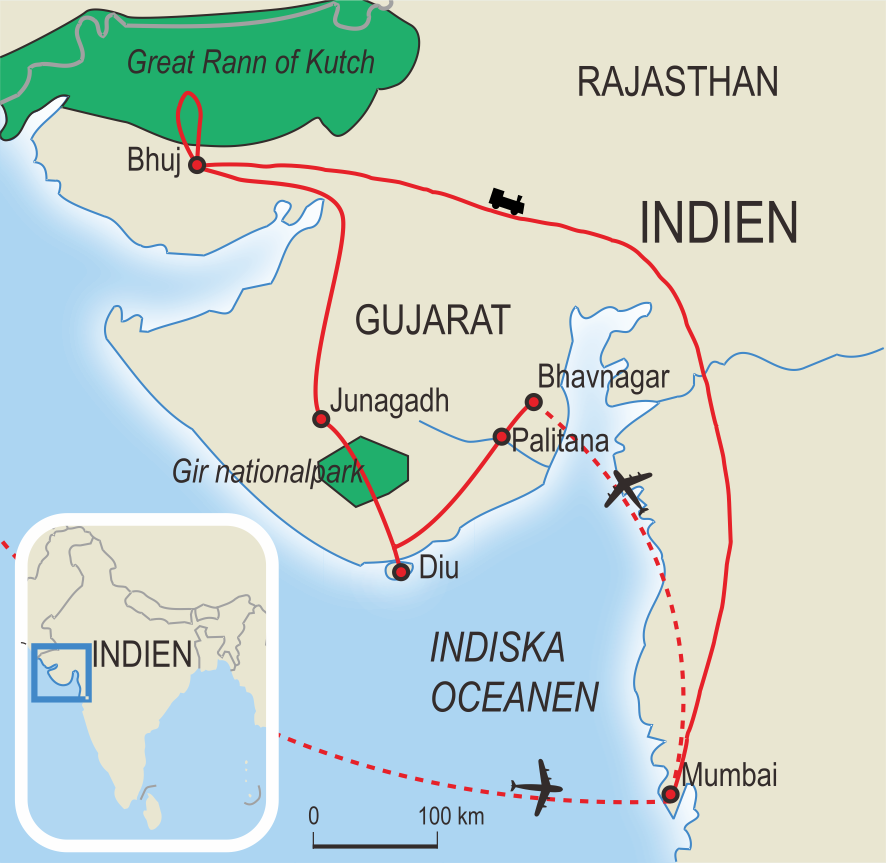
Day 1Arrival Mumbai. You can change money at the airport. Your tour leader, Mr Hasmukh Gor, will meet you in the hotel. Mumbai has 18 million inhabitants and is famous for being the centre of Bollywood movies. You have the afternoon and evening to explore this interesting city. Visit the colonial monument India Gate, explore the bazaars or take an evening stroll at Chowpatty Beach.
Day 2-3
Early in the morning transfer to the airport where you take a morning flight to Bhavnagar in Gujarat.
From Bhavnagar, a sprawling city with around one million inhabitants, by private minibus/taxi to Palitana, 50 kilometers south-west of Bhavnagar. You will stay in a dharamsala which is an accommodation for pilgrims! The first day you should stroll around in the colourful bazaars and enjoy the atmosphere. The second day you will visit one of the most important centres for Jain pilgrims which has made this small town famous. On a hill, just 2 km outside of the town, threre's an amazing cluster of Jain temples bearing witness of the glory of Jain religious architecture. A long flight of stairs will take you 600 meters to the hilltop where the superbly carved marble spires of 863 temples glisten like ivory towers of a fairytale city. There are 27 000 statues. The craftsmanship is superb! The most sacred temple is dedicated to Adhiswara, the first Jain saint. Next to it is, by the way, a Muslim shrine. After sunset even everybody including monks and nuns have to leave this holy area to the gods alone. Count on an hour of good exercise to get to the top. You walk barefoot. If you are very old, very young or lazy, you can ask for a doli and you will be carried up all the way by two men. It is not allowed to sell anything on the hill, so you should bring snacks and drinks with you. In Palitana there is only vegetarian food. Gujarat is a 'dry' state which means that alcohol is forbidden. The only exemption is Diu.
Jainism is contemporary with Buddhism, from around 500 BC, and both were originally 'protest movements' aginst the vedic hinduism. The Jains believe that universe is infinite and not created by a God. They believe in reincarnation in much the same way as Buddhists. Their goal is to reach liberation (moksha) from the circle of rebirth by following the teachings of the 24 tirthankar or 'profets'. The last one of them is Mahavir who is also considered as the founder of the religion. The word jain is derived from jina meaning 'spiritual conquerer' (andlig segrare). The idea of conquering oneself is very important and Jainism has become one of the world's most rigorously ascetic sects, sometimes to the extreme. You will for example see and probably meet some monks who are 'air clad' (digambaras) and live completely naked all year round. The nakedness symbolises that they have renounced all worldly possessions. Other jainists, monks as well as nuns, wear white clothes.
In searching for salvation it is important for Jainists to avoid hurting all living things. This is called ahimsa or non-violence, a Jain motto that was adopted by Mahatma Ghandi. Thus Jains are strict vegetarians and some of them even cover their mouth with a thin piece of cloth not to risk swallowing an insect by accident. Some carry a broom to sweep the street in order not to step on any living being.
There are about 4 million Jains in India and most of them live in the west/south west of India. They tend to be commercially successful and have an influence in society which is large in proportion to their numbers. Many of them have settled as successful businessmen in Mumbai (earlier called Bombay).
Day 4-5
By coach to Diu, a ride that will take around 3,5 hours. Most likely you will like to visit Nagoa beach to swim, enjoy the sun or sit under the palms. You can go there by auto-rickshaw or rent a bicycle at the hotel. Nagoa is only 6-7 km from the town and has some food stalls. Another alternative is Chakra Tirth Beach, which is more desolate and closer to town. Notice that you should not wear a bikini on the beach!
Diu island was early an important trading port and naval base from which the Ottoman Turks controlled the trade in the Arabian Sea. From the 16th century it was a Portuguese colony, until taken over by the Indian army in 1961. The city is a labyrinth of small, winding streets. Many houses are richly ornamented and the architecture shows the Portugese influence. For visitors the jewel in the crown is probably the massive fort, finished in 1541 during the Portugese era and an impressive sight. It is possible to visit the fort which today also houses a prison. Only some 15 Christian families are said to still live in Diu and out of the three churches here only St Pauls is functioning as a church.
Today, Diu is governed from Dehli as a union territory rather then being part of Gujarat. The island is only 13 km long. The main source of income is fishing, salt and alcohol. There is a distillery here and drinking alcohol is allowed, something that you might notice amongst the people walking around.
Day 6-7
After lunch you go by motorcycle rickshaw to Delwara. As there is no train station in Diu you have to take the train from Delwara to Sasan Gir National Park. The trip takes 4,5 hours. In Sasan Gir you will stay for two nights in a guest house just outside the gates of the park but still in the forest. There are some restaurants nearby and a river. There are a lot of birds and monkeys around. Sometimes, in the evenings, panthers are visible. You must be extra careful in the evening if you are travelling with youngsters, because panthers are active then and they can be dangerous!
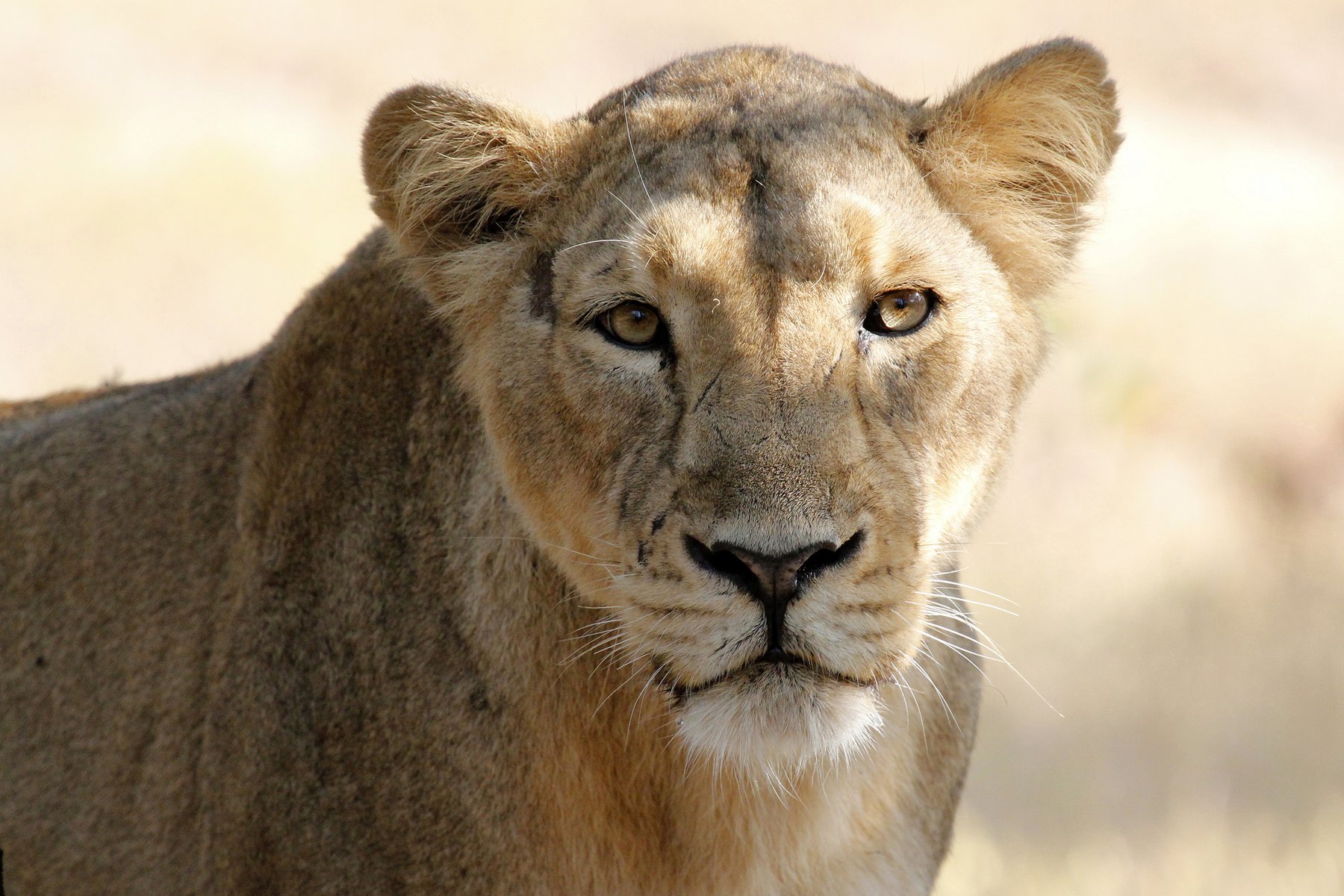
Sasan Gir National Park covers 1400 sq. km, with a core area of about 300 sq. km. The Gir forest is the only remaining home of the Asian lion which was on the verge of extinction by the end of the 19th century. Since then their numbers have grown from around 20 to 325, initially due to the protection from the nawab (or Muslim ruler) of Junagadh. Once the Asian lion inhabited an area from Greece to India but today only in the dry and open scrubland of Sasan Gir. The Asian lion has a bigger tail tassle, bushier elbow tufts and a smaller mane than its African cousin.
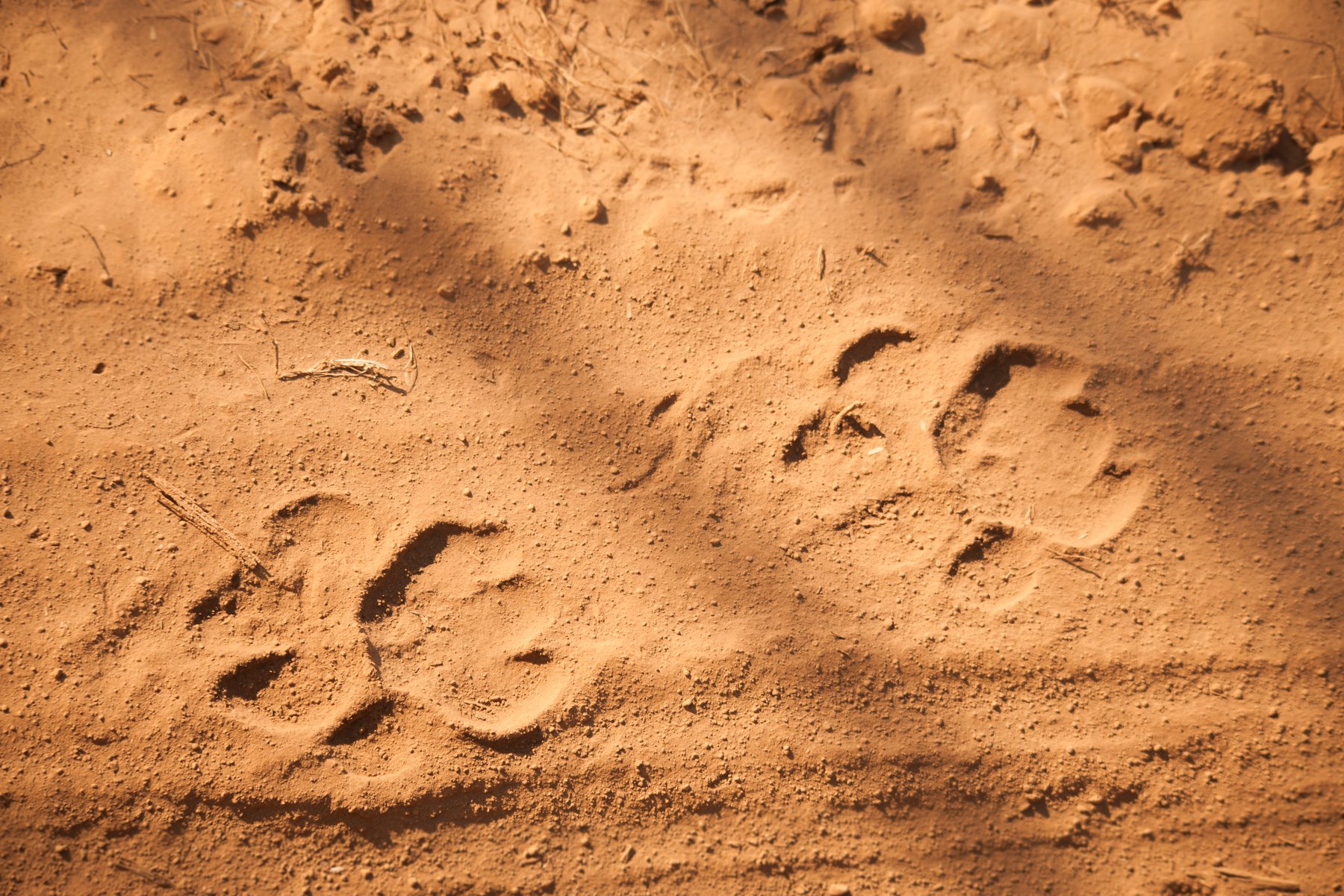
The chances of seeing lions here are good here but one cannot be sure to be lucky. Usually one goes around in jeeps to spot the lions and sometimes it can be done by foot. Generally lions are known for never attacking humans. There has however happened that a lion killed a human being but that lion is now in the Zoo in Junagadh. Sometimes the lions also wander outside the sanctuary to hunt for cattle.
With Sasan Gir as starting point you make an early morning excursion into the forest by jeep. This is included in the price. Where and when to do excursions on foot will be decided by the forest officers and is not always allowed. Along the road you have a chance of seeing Nilgai antelopes, deers such as Spotted deer and Sambar deer, monkeys, probably hyenas, maybe wolves. Peacocks strutting along with their gorgeous plumage is a very common sight and the bird life is very rich. In the forest there is a crocodile farm. The Maldaris, about 500 people, live in the forest and have a special permission to graze their cattle in the reserve.
Inside the national park there is a small village where descendants of slaves who used to work for the old Nawab live. Being strong, they once served for exampel as body guards for the nawab. They, men as well as women, ended up here generations ago after having fled from Diu and the slave transports from Africa, so the saying goes. Some probably also migrated here voluntarily to serve in the court of the nawab. They are known hours through a flat agricultural area. You stop to take a look at how cotton groves, at mango gardens and whatever you want that seems interesting.
Day 8-10
At breakfast by jeep or minibus to Junagadh with about 190 000 inhabitants. The trip takes 1,5 hours. Junagadh is an ancient fortified city rich in myth and legend, situated at the foot of Girnar Hill. Its history goes back to the times of Emperor Ashoka (250 B C). He was a Buddhist convert who propagated peaceful coexistence among the different peoples of his vast empire. His peace message and other edicts were inscribed on pillars, raised all over the country. The pillars were crowned with animal sculptures and one, the pillar in Sarnath, is now the emblem of the Indian republic. On the way to Girnar hill there are 14 rock edicts of Ashoka, inscribed on a big boulder in Pali language. as Siddis or Abysinnians. If time permits you will go by jeep to visit the village where they live on farming and illegal hunting.In Junagadh it is possible to visit Upar Kot, or the Upper Fort, once famous for its inaccessibility but today partly ruined. An ornate entrance gate leads into it. The fort is girdled by a wall sometimes 20 m high. Jama Masjid, the mosque in the fort, was built using stones from a ruined Hindu temple.
On the hillside close to the fort are some ancient Buddhist caves with richly carved pillars about 1500 years old. Another point of interest is Mahabat Maqbara, the mausolea of the nawabs, the traditional rulers of Junagadh. The entrance doors are of silver.Get the keys from the nearby mosque and see the fantastic architecture.
If you found Palitana interesting you may want to visit another pilgrime site, holy to Jains as well as Hindus. 10 000 stone steps will take you to the top of Girnar Hill. The entrance is marked by a holy dam, Damodar Kund. Girnar Hill is much higher than the mountain in Palitana, 1150 meters and you need about 2,5 hours climb up. Best time is early morning. There are dolis to hire if you don't want to walk to the top. You pay by your weight. Food and drinks are sold on the way. At the top you are well rewarded by this famous hilltop temple city. The five peaks are crowned with 16 carved and sculptured marble shrines. The oldest and largest is dedicated to Neminath, the 22nd Jain Tirthankar (profet) who lived in the 12th century. The Amba Mata temple is named after the mother goddess and newly-weds come here to pray for a happy marriage.
Your hotel is centrally located and in an area with traffic.
Day 11-13
In the morning by local bus to Bhuj. The ride will take around 10 hours and give you a glimpse of what public transportation in India is all about. Bhuj is the capital of the region and is famous for its colourful markets and small narrow streets. The old part of the town was destroyed by the earthquake in 2001, but there is an ongoing process rebuilding this part of the town. Many of the finest monuments were destroyed but you can still visit the botanical gardens at Sharadbagh, the folk museum and the Swaminarayan temple.
To visit the rural areas north of Bhuj you have to get a permit from the local authorities because this is a sensitive area due to its proximity to Pakistan. To apply, all of you have to present yourself in person at the office of the DSP (District Superintendent of Police) to fill in a form. The whole procedure may take some time but is necessary for a permit. Your tourleader will help you with the technicalities.
Day 14-16
By bus to Banni area some 60 km north of Bhuj. Banni means 'a cluster of villages. This is one of the highlights of the whole trip when travelling by camel cart between villages in the Great Runn of Kutch on the edge of the desert. You may sit comfortably on the cart, walk behind if you want to exercise or ride the camel. It is not difficult to ride, but not very comfortable either
You will visit some villages where you will stay with local families. Most likey you will stay 2-3 persons with one family. The tourleader will assist with interpretation in one family, the other small group will have an interpreter with them. There are some 40 villages, called vandhs, in Banni area. They consist of round or square mud huts (bhungas) surrounding a large community court yard. You will sleep in the same room as your host family, not in separate rooms, and on the floor. Blankets will be there for you. The standard is naturally very basic. The families will prepare your food. Milk and bread (roti) made from millet (hirs) are the staple food items as you will notice. The tour leader will however bring some supplementary food with him. Water (mineral water) you bring for yourself. Estimate 2 litres per day.
There are some 40 villages, called vandhs, in Banni area. They consist of round or square mud huts (bhungas) surrounding a large community court yard. You will sleep in the same room as your host family, not in separate rooms, and on the floor. Blankets will be there for you. The standard is naturally very basic. The families will prepare your food . Milk and bread (roti) made from millet (hirs) are the staple food items as you will find out. The tour leader will however bring some supplementary food with him. Water (mineral water) you bring for yourself. Estimate 2 litres per day.
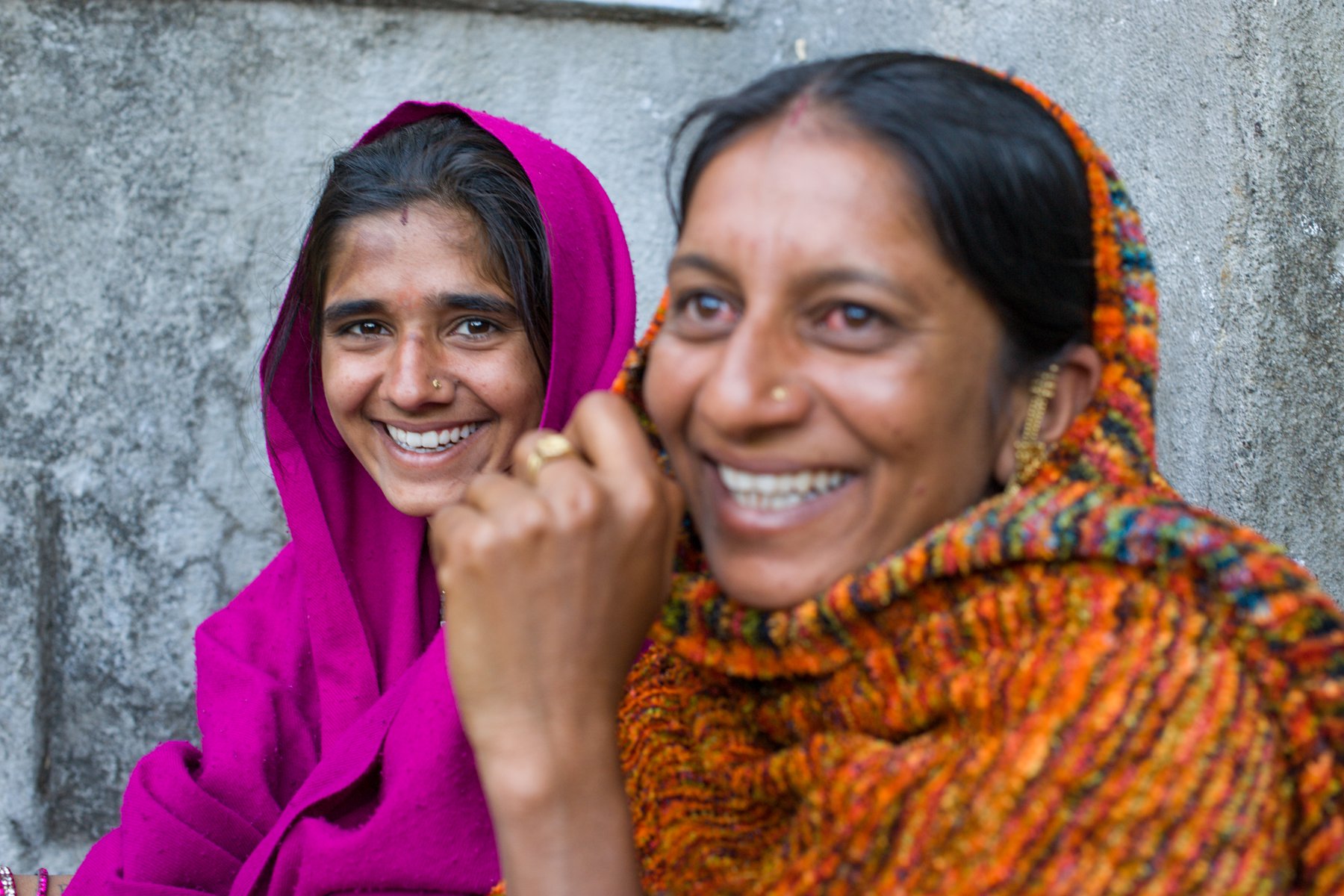
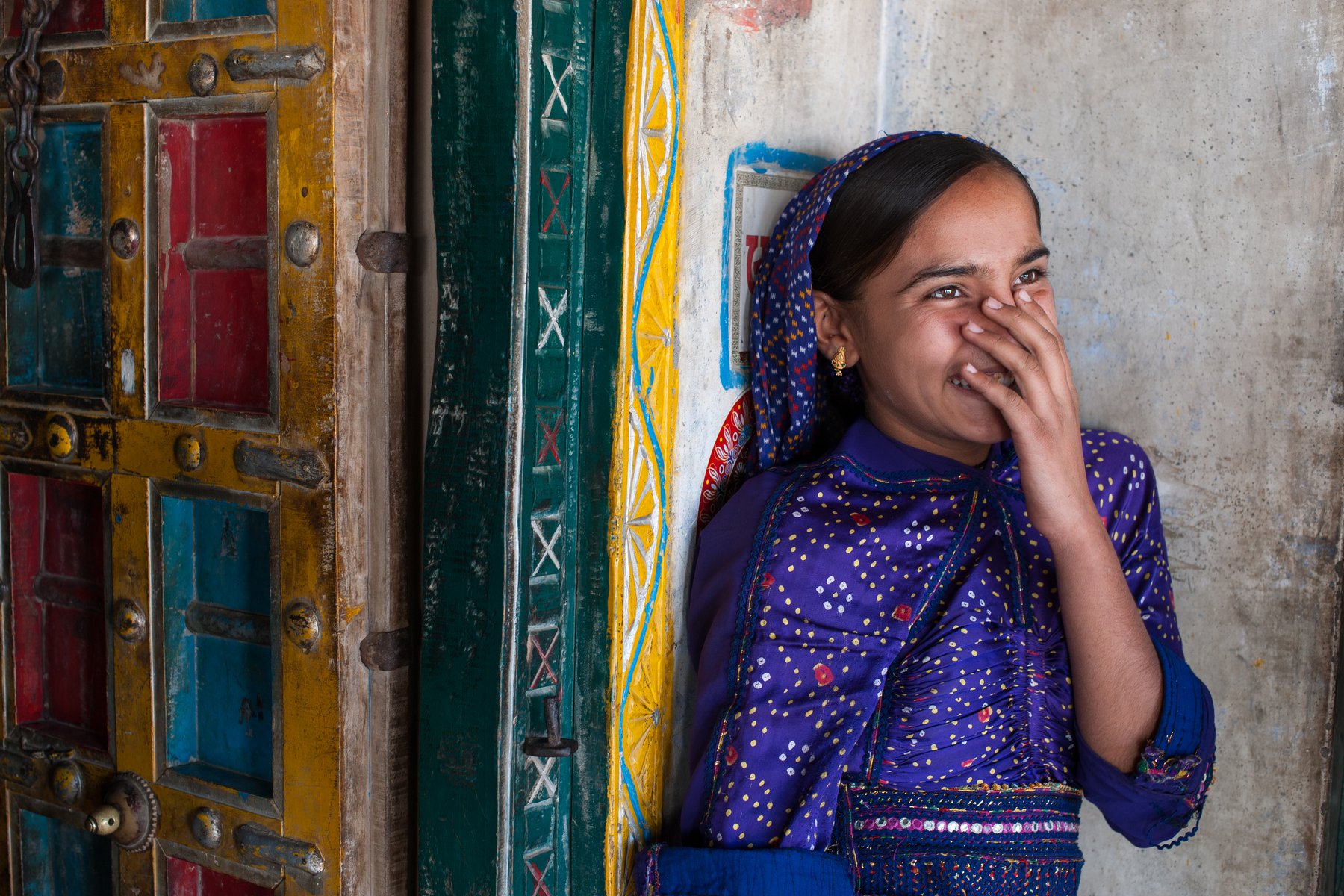
Most people in the interior are classified as tribal people. They belong to different ethnic groups, such as Jat, Vadha, Patan, Harijan, Haleputra, Sumra. Here you will perhaps also meet the famous Rabaris migrating with their herds of sheep. Few foreigners visit this remote region, at least the interior villages. People are very hospitable indeed and you can be sure that you will be well received.
This region is much less developed than the average Indian countryside. There are few roads and few schools. Medical facilities are hardly available. Most people are illiterate and few children go to school. People are very poor although food does not seem to be scarce. To survive here, people depend on cattle breeding, keeping cows and buffaloes.
The land is infertile, here at the edge of the Runn. 'Runn' in Gujarati means salty area. The high content of salt in the marshy soil makes farming impossible almost everywhere. Nothing can be cultivated. The area is a semidesert and mainly covered with dry grasses, thorny bushes and acacia trees. Every three years or so there is no rainfall at all while other years can bring devastating floods during the monsoon. With the monsoon starting in Mid June the area is inundated first by salty ocean water, then by sweet water from the rivers. During the dry period the Runn turns into a huge desert, covered by hard, dried mud. Rann is the home of the Asian wild donkey and a part of the area is set aside as a reserve to protect this rare animal.
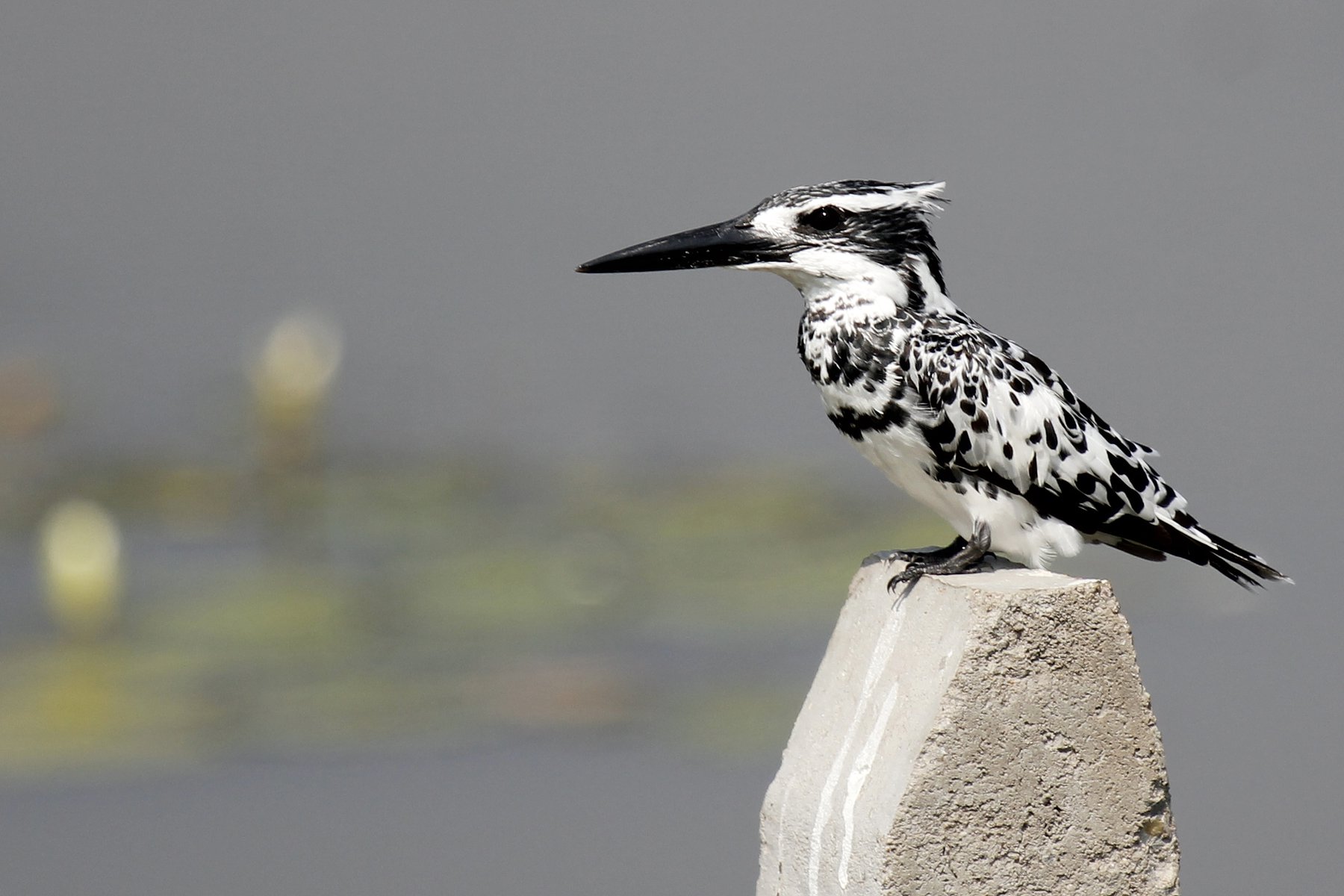
During winter thousand of flamingos and pelicans breed here. During summer cobras are very common, but during winter they are deep under ground and you are not likely to see them. Wolfs are common and a menace to the sheep herders.
Day 17-19
Return by bus or truck to Bhuj where you pick up luggage you didn't bring on the camel trip. Then you catch a bus to Mandvi on the coast, about 60 km southwest of Bhuj. You stay in the Sea View hotel. You have two and a half days in Mandvi. Mandvi is an old town with narrow streets and fascinating buildings. It is also famous for its shipbuilders and if you visit the harbour you will understand why. From here one trades f. ex. with the Gulf states, exporting onions, salt and sand for cement making. The Vijay Vilas Palace is about 8 km from the city and on the beach. It was built in 1927 and belongs the Maharaja of Kutch who earlier used it as his summer residence. Today it is empty. If you want to swim it's possible here and you will probably be alone on the beach. If you want to make an excursion you can visit Tundavand, a beautiful Rabari settlement some km from the sea. Around 200 Rabari families live here in round houses. The women are dressed in black wollen cloths. From here you can continue to Bhujpur, a small village where you will see different kinds of artistic wood block printings. This excursion is not included in the price, ask your tour leader for advice about renting a car or jeep. In the evening the last night you go by bus to the trainstation in Bhuj where you take a night train to Mumbai (Bombay).
Day 20
You will arrive in Mumbai around lunch time and have the afternoon and evening to spend in India's biggest city.
Day 21
Tour ends.