
Last updated: 2012-05-10

Facts about China

CapitalBeijing
Population1 273 million
Area
9 600 000 km2
GDP/capita
3 180 USD (2008)
Avarage life span
Men: 70,7 Women: 74,4 (2007)
Literacy
Men: 95 % Women: 87 % (2006)
Language
Chinese
Rainy Season
June-August
Currency
Yuan Renminbi CNY
Time zone
+7 h (+6 h during summer) CET
ReligionNo state religion
GovernmentCommunist one-party rule
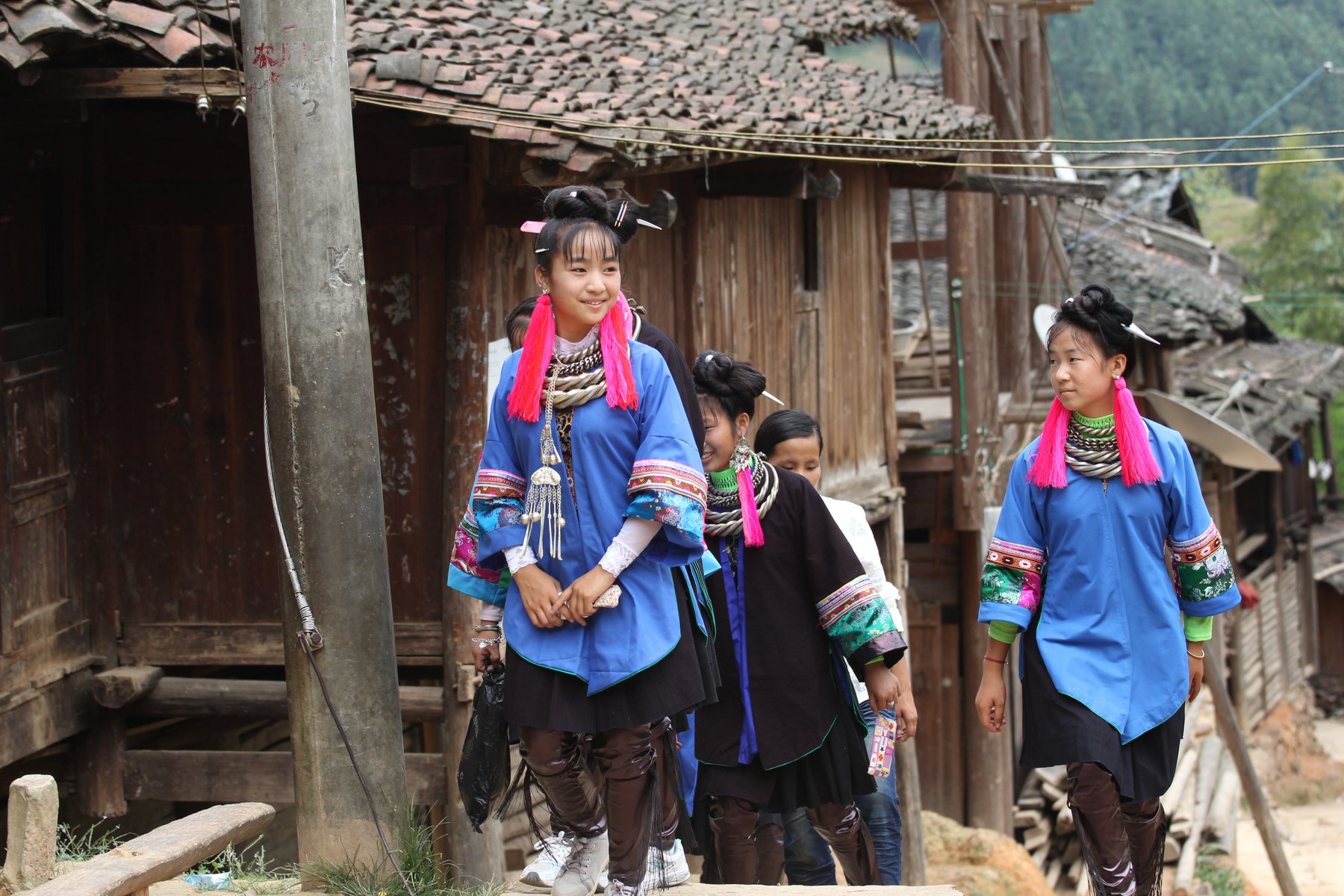
Bric-s-brac55 diffrent nationalities

Tour leader

The tour leader is the most important person on the tour. The tour leaders main tasks are listed below together with what he/she is NOT supposed to do. You will soon see that this doesn’t always correspond with the expectations from a regular tourist guide.

The tour leader’s main task

  • To be the sole tour leader and sole decision taker about possible chances of the set up of the tour.
  • To be responsible for all practical arrangements.
  • To assist and encourage group members to carry out activities on their own.
  • To treat all group members equal and with respect.
  • To give information about places you visit and general information about the country.
  • To have regular meetings with the group.
  • To make the group members interested, active and positive towards the local inhabitants.
  • To assist group members in case of illness or accident.
  • To contact the office in Stockholm in case of a serious situation.

NOT the tour leaders tasks

  • To give personal service.
  • To accept bad behavior from the group members.
  • To re-confirm individual flight tickets.
  • To take care of lost luggage after leaving the arrival destination.

Back to top

Flight information

On most of our tour the international flights are not included from and to the destination, with a few exceptions during high season. When you book your flight you get a better possibility to influence flight times and departure airports.

Conditions for booking of flights
On our home page you can see when the least amount of participants on a tour is filled. It is then time for you to book a flight. The information is updated daily. Choose the tour you have announced your self on and click on "book". There you will find three options:

  • Yes, you can book now.
  • No, wait before booking flight.
  • Flight is included in the tour price.
  • If we against all odds have to cancel a tour even if the minimum amount of participants is filled, naturally we compensate your cancellations fees for the international flights (this does not apply in case we have to cancel a tour due to so called Force Majeure, se our special conditions). Feel free to call in case of doubts or questions.

Tips for booking of flights
When the flight is included, the tour leader meets the group on the airport. When the flight is not included, we provide with you the information on how you get to the gathering hotel easiest.

The gathering is on Day 1 at the hotel of the tours first destination. The day the tour is finished, is the day you can start your journey home.

You can book your ticket where you prefer. You often find the lowest prices on Internet. Keep in mind that the ticket is normally not rebookable.

If you need a ticket for more than two stretches or when you travel from another place than where you arrived (open-jaw), you can use:

Of course you can turn to a travel agency.

NB! Remember to check whether your ticket need to be re-confirmed for your journey home. The tour leader will be able to inform you on how to re-confirm your ticket. If re-confirmations is needed it normally has to be done 72 hours previous to your flight home.

In case of problem finding a suitable ticket, feel free to contact us. We are happy to help you.

Arrival time
If you have booked a ticket with an arrival time that makes it difficult to make it to the gathering Day 1 (like if you land late at night), we want you to inform us at Study and Travel, so that we can forward the knowledge to the tour leader.

If your flight, upon traveling to the tour destination, is that much delayed that you aren't going to make it to the gathering in time, you are to inform the tour leader immediately. (Phone nr will be sent to you in the last circular before departure)

Back to top

Passport and Visa

Passport
Your passport must be valid sex months after you've entered China. It also must contain two empty pages. Please, check this carefully!

You need a Visa for China!

If you live outside Sweden you have to arrange your own Visa for China. If you are a journalist or priest it is better to write another occupation to avoid unnecessary questions.

If you live in Sweden we will arrange your Visa and this is included in the tour price. However, if you don't have a swedish passport there might be another Visa fee that is not included in the tour price.
If you live in Sweden but doesn't understand swedish, please contact us for more information about the Visa procedure! If you understand swedish - go to the swedish version of this site!

Back to top

Accommodation

The accommodations are relatively basic during our tours, specially during treks and village stays. Normally we use, for the respective country, typical middle class hotels. A part in a double room is included in the tour. During special circumstances, and only then, more than two persons can share a room. Our group members always share a room with a person of the same sex (when travelling alone) and the tour leader uses the principal of rotation, that enables everybody who travels alone to change roommate. It is important that you show consideration to you roommate. If you know that you snore, a good idea is to prepare yourself with nose clips, spray medicines or similar products that are available without a prescription in pharmacies. If you have special habits that may disturb others' sleep, we urge you to consider a single room. A group member that disturbs a roommate can during on going tour be referred to a single room against single room addition.

When travelling with a spouse, a partner or a friend , you share rooms with him/her. If you live on the same address we plan for a joint room during the travel. If you do not live on the same address, please inform us so that we can plan for a joint room.

It is possible to book a single room on every tour against a fee. On tour that include staying overnight in tents, you will get a private tent. Please inform us as soon as possible a single room is desired.

A nice way to get contact with the family is to offer to help out with the daily chores. Do count on being dismissed, when offering. Don’t let this stop you, insist that you want to take part. You might be able to help prepare the meal, in the kitchen garden, watch the children or to put the cattle out for pasture. You could ask a family member if you can accompany them into the market, school or the fields.

Hotel/ Standard

I the bigger cities in China you will stay in a double room. A standard double room has two single beds, a seating area, usually a TV and a bathroom with a toilet and shower or a bathtub.
Most hotel rooms has a wall-to-wall carpet and you usally find a supply of hot water and tea cups. The quality of the technical standard of the bathrooms can vary. In China they are now building a lot and they do it fast. The backside of this is that they do it at the expense of quality. If you find serious quality issuses in your room you should of course ask to get another room, but to a certain limit we have to accept this.
In smaller cities the standard in generall is lower.

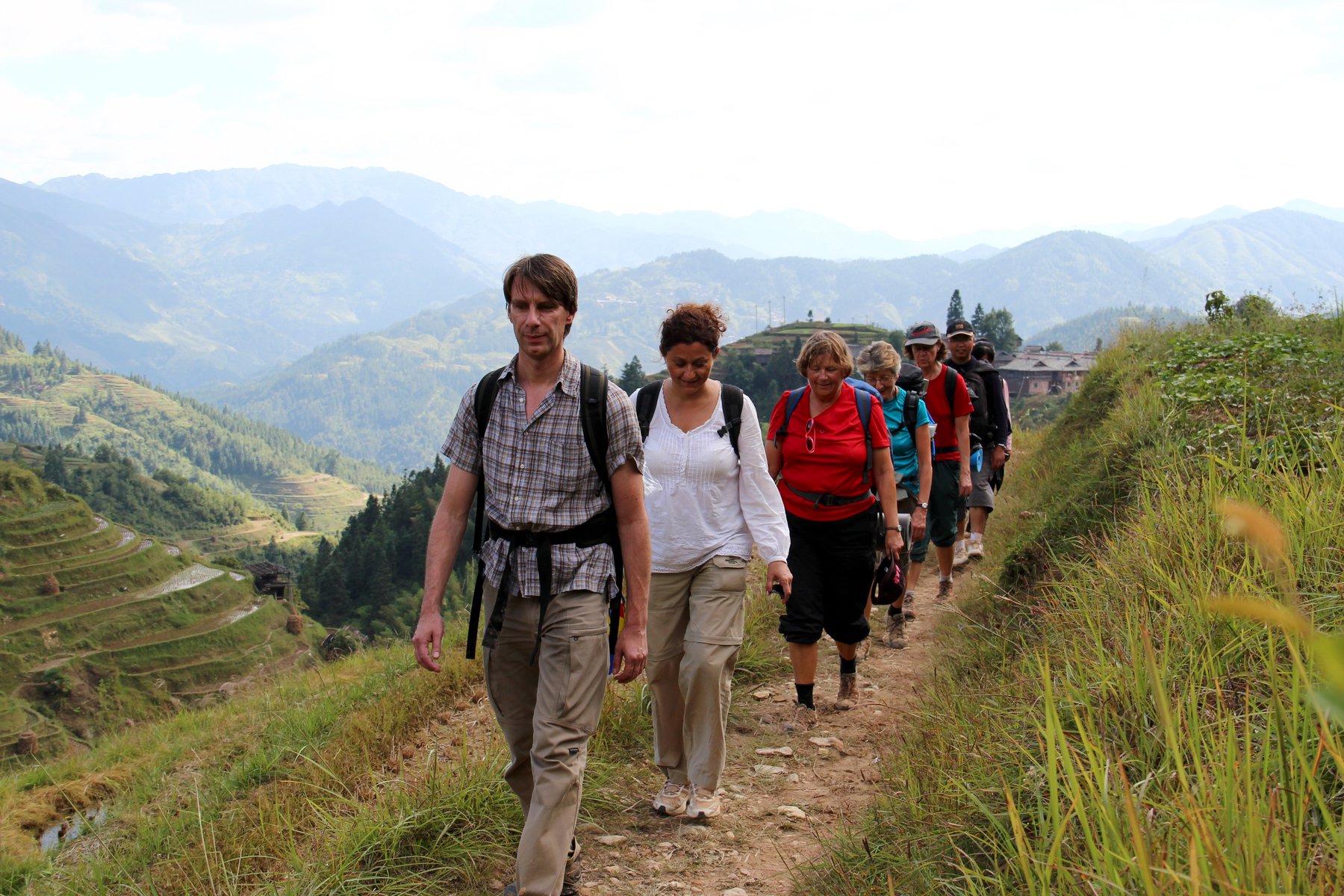
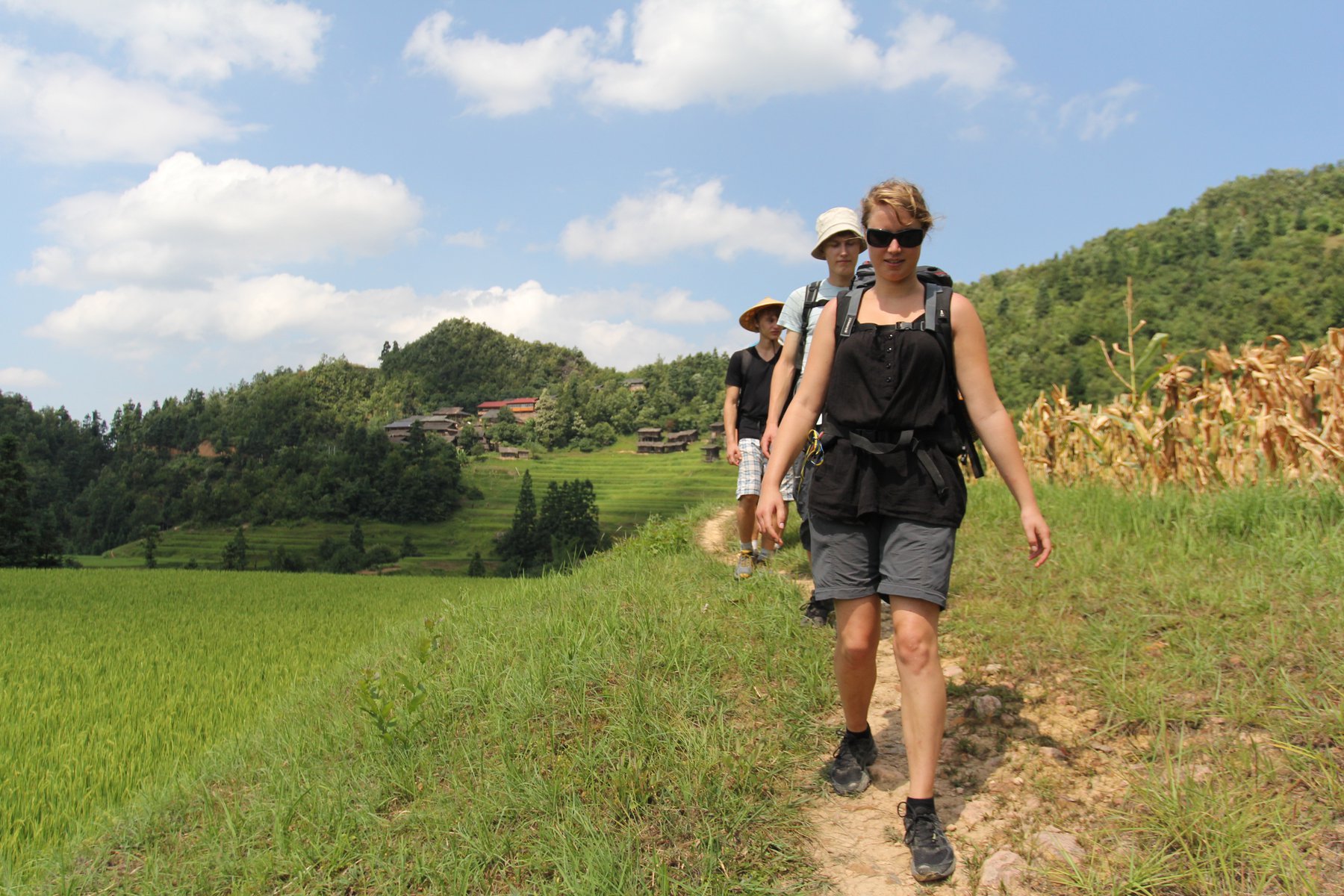
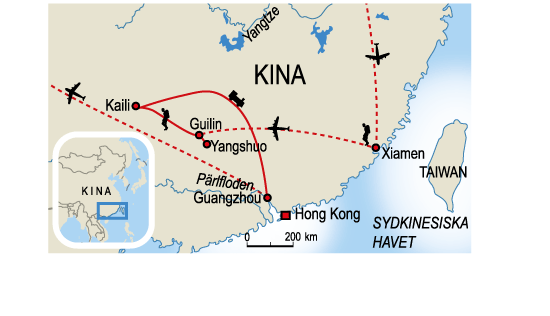
This applies for the tour Trekking in China

Guesthouses

In Tianloukeng and Chengyang you will stay overnight in simple guesthouses. You'll get a bed and the bathroom will probably be shared and located outside the room. Don't expect having a shower and hot water all of these days. Wipes are a good idea to bring along if you like to freshen up a little

Village stay

On two occations you will spend the night in a family on the countryside. During these villagestays you will experiece very simple conditions when it comes to both sanitary and comfort. You will be asked to sleep in a bed or on the floor. The toilet will probably be located in a outhouse and there will be no shower, perhaps a sink where you can wash yourself. In China it is not always customary to change the bed linen after every person that's been using them, so bringing some sort of a travel sheet is advisable.

Back to top

What is included in the tour?

  • Qualified tour leading during the whole tour.
  • All in the itinerary mentioned transports including local transports.
  • Hotel or other accommodation according to the itinerary unless otherwise stated below (What is not included in the tour?)
  • Domestic airport taxes and other compulsory fees.
  • Visa when applied in or from Sweden.
  • All interpreters mentioned in the itinerary.
  • All formal permits.
  • Tips during activities included in the itinerary when paid for by the tour leader.
  • Literature and map relating to the country of destination. See special conditions.
This applies for the Trek in China tour
  • Interpretor during the trekking days (one interpretor per 3-5 travellers).
  • Entrence to the villages Tianloukeng and Chengyang.
Back to top

What is not included in the tour?

  • International flight, unless specifically mentioned.
  • Food, unless otherwise stated above (What is included in the tour?)
  • Entry fees to national parks, museums etc are in general not included.
  • Excursions made on your own initiative outside the itinerary.
  • Tips during activities that are NOT paid for by the tour leader.
  • Visa acquired at arrival to the destination.
  • Airport taxes at return flight back home, if any.
Attention! If you choose to deviate from the tours itinerary, all costs will be at your own expense.
This applies for the Trek in China tour
  • Accomodation and transports during the trekking days (day 11-15) are not included.
Back to top

Finances during the tour

On most of our tour destinations you can withdraw cash directly from an ATM/cash dispenser. You often get the local currency to a good exchange rate. Below you find some links that help you locate ATMs/cash dispenser in different countries.

It is more safe to use ATM on the tour compared to purchase all the foreign currency at home. Also many local currencies are not available at home or only at high costs.

The risk is always that you may lose your card or the magnetic strip is destroyed. To be more safe you may get a second card. Our experience is that it has always been possible to borrow money from somebody in the group when one´s own card is not working.

Visa

http://visa.via.infonow.net/locator/eur/jsp/SearchPage.jsp

Mastercard

http://www.mastercard.com/us/personal/en/cardholderservices/atmlocations/index.html

Your own expenses need not be very high. Of course this depends on the price levels in the country. The link below takes you to a site where you get an indication on current price levels in several countries:

http://www.roadjunky.com/traveltool2.php

Current currency rates are found at:

http://www.oanda.com/convert/classic

http://www.xe.com/ucc/

This applies for our tours in China

Money

The monetary unit in China is Renminbi (Rmb), sometimes referred to as yuan (pronounced yuen) . You'll find ATM:s all over China including major airports. Sometimes it is diffucult to pay with 100 rmb bills. Try to always have change in small denominations.

Cost for food

You will find food everywhere you go. How much you spend on food is of course depending on where you choose to eat. In the big cities you can find everything from simple food stalls to western top end restaurants. If you eat on the street, as most local do, you will not spend a lot of money. If you choose restaurants that locals go to and once in a while treat yourself with a more up market choice, you should still not average more than about 120 swedish kronor a day.

Other cost

For excursions, cab rides etc you should add another 100 swedish kronor/day in average. In Beijing especially but also some other places, entrances to popular sights can cost a lot if you visit many places.
This applies for the tour Trekking in China

The cost for accomodation and food during the trek is not included in the tour price. The reason for this is that there are alternative trekking trails. The cost for accomodation and food during the trek should be around 100 yuan per day.
Back to top

Equipment

This is a general suggestion on what can be useful to bring on the journey. Below you find specific tips for this particular tour.

  • Passport, visa, money, flight ticket, copy of your passport and proof of insurance
  • medicines (if you have prescription medicines, note that some countries might ask for a certificate)
  • backpack/bag
  • small backpack or similar for daily use and as hand luggage during flight.
  • sneakers or/and sandals
  • tidy good-looking (clean) clothes for when invited out
  • swimwear
  • towel
  • hat/cap for protection from the sun
  • sun glasses
  • flash light/head lamp
  • alarm clock
  • travel sheet
  • money belt/security belt
  • pocket knife/multi tool for daily use ( not to be packed in hand luggage)
  • camera, extra memory card + extra battery
  • gifts (something simple and not expensive
  • photos from your country- a good link to contact!
  • backpack pharmacy (see Health and vaccinations)

Nb! When it comes to packing the most common mistake is to bring too much, not too little.

Keep in mind that there is always a small risk that checked-in luggage can be delayed and in a worst case scenario, be lost. Always bring the absolute necessary in your hand luggage.

This applies for the tour Trekking in China

You need to bring a sleeping mattress and and a travel sheet during the trek. It will be warm during the day but it might be a little chilli during the nights. A warm sweater is also recommended.

During the trekking you can leave some of your equipment in Rongjiang. Try to bring as little as possible because the terrain is hilly and you will get tired. If you not sure that you manage to carry your equipment you should discuss this with the tour leader. It might be possible to hire a porter at you own expence.
Back to top

Climate and weather

This applies for the tour Trekking in China


The south of China is located at the tropic of cancer. This means there is a risk for downpours all over the year. In average it rains every third day. During the time for our tours it rains slightly less. During springtime the temperature is slightly cooler than the fall. The temperature will be around 20-25 degrees Celsius during daytime. In the mountains it will be a bit cooler, especially in the evenings and during the nights.

Weather in GuiyangRain in Guiyang

Back to top

Food and drinks

Breakfast

In most chinese hotels breakfast is not included. Some hotels have a diner where you can have breakfast for a small fee. A common breakfast include pap, steamed sweet bread, a boiled egg and pickled vegetables. Sometimes they serve tea but not always. Coffee is getting more popular in China but don't expect go find coffee outside the bigger cities.

The alternative is to have breakfast on the street. A lot of chinese eat their breakfast on the street and there is a wide selection of food places open in the morning. A common breakfast is steamed dumplings (baozi), pap, fried bread (youtiao), pancakes, nudles etc. In our opinion the street breakfast is far better the the hotel option.

Beverages

In most chinese restaurants you will be served green tea with your meal. To have a cup of coffee you need to go to a western inspired restaurant or a café. If you are addicted to coffee we recommend you to bring nescafé or similiar (you can find this in China) and drink your coffee at your hotel. Most hotels have a water boiler in their rooms.

Other common beverages are; beer, sodas and bottled drinking water.

Dinner

When you go to a chinese restaurant it is common that a group order a couple of dishes together. Then you eat what you want from all plates. Usally you don't order your own dish as you do in chinese restaurants in most european countries. Chinese people, when they go out, they eat, drink and talk for a long time. Chinese people, when they eat, focus on the different main courses, the rice is secondary in contrast to what you'd expect. Chinese people eat rice only to fill up and they don't want to ruin a good meal with rice. Because of this rice is often served after the meal. If you want your rice with the rest of your meal you have to make this very clear to the waitor. In chinese you say "xianzai shang mifan" 现在上米饭

Back to top

Customs and manners

Remember that you are a guest in the country you are visiting. Therefore it is important to regard and respect to local customs and traditions. Be extra cautious in religious areas, places with ongoing conflicts and economically sensitive areas. A good rule is to observe and learn from the local inhabitants. When in doubt, please consult your tour leader.

Also remember to respect the local people while taking pictures Read more about this under Photographing

One of the charms on journeys is that it is not like at home. It is important to keep this in mind and meet new phenomena and differences with an open mind. Pack a portion of patience and curiosity in your backpack.

Lavatory tips:
Many of our tours go to countries where toilet paper is rare and where our types of toilets sometimes can't be found outside larger towns. Toilet paper can however always be bought in towns. In the rural areas, the forests or in the desert toilets might not exist at all.


This applies for our tours to China

To communicate

Chinese is a very difficult language to learn, especially the pronouncation and the written signs. The grammar, however, is quite simple and it is possible to learn some basic chinese without learning any written signs. School books and dictionaries use latin transcription that is called "pinyin". If you want to learn more there are phrase books to buy in your country as well as in China.

Do you take your shoes off when you enter a house?

It depends if the floor is made of earth/concrete or if it is wooden or has a carpet. If it is made of earth/concret you keep your shoes on otherwise you take them off. Chinese people, if they take their shoes off, often use a pair of slippers indoors. Accept the offer if they give you a pair.

At the dinner table

You shouldn't empty all the food in your bowl or on your plate. To leave some of the food or a drink is a way to say that you are satisfied and don't crave for more. If you empty your bowl/plate or glas you will most likely be served more. Sometimes it happends that your host put food in your bowl. Let them do that even though you don't want or like the food. Just leave it. To say you don't want more is unpolite, you just don't do that.

It is not common in China to put soya sauce on your rice. It is not bad manner it is just strange. You will not find soya sauce on the table in most restaurants but you could of course ask for it.

It is not bad manner to leave the table when you have finished your meal. On the contrary, it is a common way for chinese people to show that you're full.

Alcohol

To accept a glas of rice wine is a way to show appreciation and to honour your host. If you don't want any alcohol you should say that you can not drink alcohol. As long as anyone in the company accepts a glas of beer or rice wine the host will most likely be satisfied.
It doesn't matter what you drink to propose a toast, but you only drink when someone proposes a toast, you don't zip on your own. It is ok even for guests to propose a toast ("ganbei" in chinese). At the end of a meal the host might propose a "real" "ganbei". That means you should empty your glas. If you have a lot in your glass, don't feel forced to empty it.

How to say no thank you

If you're offered anything you really don't want you have to be prepared to say no thanks many times. In China it is polite to say no thank you one or two times even if you intend to accept what's offered.

In restaurants

In China it is common for friends to go to a restaurant together and it is an honour to pay for the bill. To pay for your own food only or to put all the money in a pile on the table, as we do in most contries, looks very strange to chinese people. In their mind it could even signify that you don't like each other. Our advice to you instead is to let one person pay for the meal and to set the bill later, outside the restaurant.

It is not mandatory to tip in China, at least not in smaller restaurants or in the countryside. However, it is getting more common the last couple of years so talk to your tour leader about this. You should only tip if you are satisfied with the service. In some bigger restaurants it is nowadays common to find a service fee (10-15%) on top of the bill. In this case you do not need to tip.

Toilets
Many of our tours goes to contries where toilet paper is a rare sight. In smaller hotels outside the big cities it is also rare to find western style toilets. Also most trains in our countries don't have western style toilets. You can always find toilet paper in bigger cities. In the countyside, in the bush or in the dessert there might be no toilet at all. It is a good idea to bring toilet paper, a bottle of water, soap and alcogel.

Back to top

Health and vaccinations

Contact a vaccination centre in time before your departure (some vaccinations need to be taken a month before)

On most of our tours you do not need to take any vaccinations. This based on the presumption that you have the normal basic protection.
  • Hepatitis. Twinrix gives good protection against hepatitis A and B.
  • Tetanus and diphteria. Most Scandinavians get this at early age.

Suggestion to a backpack pharmacy:

  • Pain killers (e.g. paracetamol, ibuprofen)
  • Dimor, Imodium, Lopex, Pepto (temporarily against diarrhea)
  • Disinfection
  • Band-Aid
  • Sunscreen
  • Mosquito repellent
  • Earplugs
  • Bandage

When it comes to food and beverage there are some general guide lines that help you prevent gastric disorders: Eat newly prepared food, peel all fruit and be cautious with fresh vegetables and ice cream. Use common sense when choosing places to eat, small local restaurants with a lot of commerce are to be preferred, rather than fancy restaurants with a western menue. Drink bottled or boiled beverages only. Avoid ice, since it can, and most likely is made of tap water. Remember to consume enough fluids when it is hot.

This applies for the tour Trekkin in China

The sun is stronger than in most european countries. Sunscreen and a hat is recommended. If you have short hair, remember to protect your back as well. An umbrella could be useful during the day if the sun is strong. Don't forget to drink a lot of water. You can buy water in Rongjiang but for the rest of the trek you have to boil water in the villages. Water purifying tablets is a good idea to bring along.

During the trek you also need to eat every now and then to get some more energy. We recommend you to bring some snacks; crackers, nuts or dried fruit. If you can buy such things from the villages it is a good way to support the local economi.


Back to top

Photographing

Our tours offer fantastic possibilities for good photography. Photographs are an excellent way to bring back memories and impressions from the journey. Many will ask you to talk about the trip, maybe even ask you to give a lecture.

As a photographer you have a responsibility. Remember that the people you meet are people, not objects, they have feelings, their own will and the right to decide over themselves and how and if they want to be exposed in photographs. This is why it is important to ask them, their children and sometimes their belongings for permission, when possible. How would you react if a foreign tourist came and started taking pictures of your children, your laundry and house, without you knowing what the pictures are for? I some cultures photographing can be a violation of a person's integrity. Be extra considerate in the rural areas and among the original inhabitants. But, don’t let the language barrier stop you, a gesture, a smile and pointing to the camera are universal codes understood by everyone. Don’t forget to thank afterwords! Feel free to ask the tour leader when in doubt.

To bring extra batteries and an extra memory card is a good idea. A good tip is to use a UV-filter to protect the lens and is useful in various situations. Even if you bring a lot of memory, it is a good idea is to go through your pictures in the evening and erase what you don’t want to keep. Keep only what are satisfied with.

Did you get any good photographs during your trip? We need good and interesting photos for our catalog and homepage. For a photo in the catalog we pay 500 SEK and for a front page 1500 SEK. A photo on the homepages pays 100 SEK, but we need many. Choose some of your best photos and send them on a CD or mail them to us. Digital photos need to be at least 1,5 Mb. We don’t accept slides nor color negatives.

Back to top

Security

The risk of being a victim to criminal activity or violence during the tour is small. You are safe in most places and always in the rural areas. In general you are safer on our destinations, than in Stockholm, with the exception of the big cities in Latin America and Africa where out ought to be careful. Even though the risks are very small, there are some precautions which are good to take, to further more prevent any unwanted happenings.

  • Avoid unfrequented places after dark.
  • Don’t display jewellery, watches, cameras and other valuables.
  • Keep money, passport and flight tickets in a security belt under your clothes.
  • Be extra alert with your belongings on metros, buses and train stations, markets and other places where there are bigger gathering of people.

Ask the tour leader if unsure.

The risk for accident in traffic is much bigger in poor countries compared to Europe. You must be more careful during your journey than you normally are back home.

Back to top

Insurances

It is your own responsibility to make sure that you have sufficient insurance during the journey. The insurance must at least fully cover medical care, accidents, transport home and legal protection. That kind of insurance is a prerequisite to participate in the tour. Check the extent of coverage of travel in your comprehensive household insurance. Cancellation insurance is not included in the price of the tour.

Nb! Bring a copy of your insurance certificate/card on the journey.

In case of an accident you can call:

SOS International a/s
Nitivej 6, DK-2000 Frederiksberg, Danmark
Telefon: +45 70 10 50 50
Fax: +45 70 20 50 56
E-post: sos@sos.dk

Euro-Alarm (Europeiska)
Telefon: +46-8 454 34 34 dygnet om

Europe Assistance AB
(Nordic Assistance AB)
Mejerivägen 9
Box 44095
SE-100 73 Stockholm
Tel +46 08 587 717 17
Fax +46 08 660 23 90

Christian Jutvik
bostad: +46 8 717 71 72
mobil: +46 70 797 84 89

Study and Travel takes no economical responsibility for additional costs that may emerge due to possible illness or accident. Cost for medical care, extra transport, medicines, possible extra guide for personal help and so on, is to be paid for by the traveler, who can claim compensation from his/hers insurance company after return. In case one traveler needs to remain in one place, the tour leader is to accompany the group and can hire someone to assist the traveler left behind. The cost is to be paid by the traveler.

If something was to happen that you are going to make a claim for from your insurance company at your return home, you MUST remember to demand certificates from the treating doctor and receipts. Those kinds of certificates and receipts are impossible to acquire afterword. The best thing is if the certificate/receipt is in English, but a certificate/receipt in the native language is better than nothing. Remember to keep all the receipts of expenses that you want the insurance company to cover. The same thing applies in case of loss of property or theft; report to the police and keep the police report.

Back to top

Terms and conditions

To take part of Study Tours's conditions go to: Special Conditions


Back to top