Senast uppdaterad: 2011-08-18

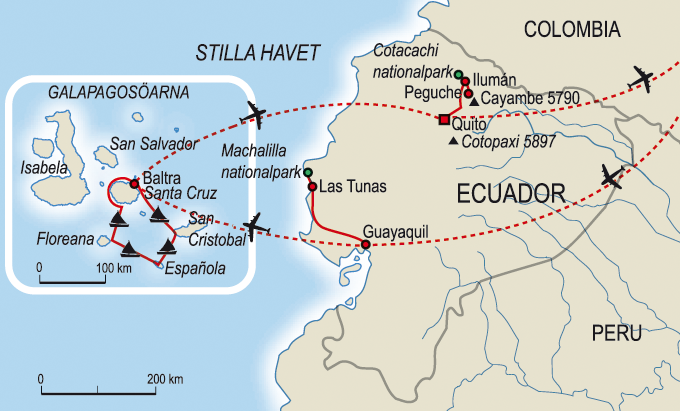
Itinerary

Day 1

The tour starts in Guayaquil.

Day 2-6, Las Tunas

Las Tunas is just a tiny little village and there is not much to do in the village itself. You can either enjoy the fact of having vacation or you can activate yourself through different excursions. Puerto Lopez is the closest "big city" and you can easily go here by bus from Las Tunas. Puerto Lopez is situated very close to Machalilla National Park and there are many interesting things you can do. You can visit other fishing villages close by, take a local bus or hitchhike to Salango, Machalilla or further southwards. The atmosphere is hospitable and it is easy to get in touch with locals. Most people get their income from fishing, so if you wake up early in the morning, take the opportunity of going down to the beach and observe the fishing men. This area is also known for its hat making industry. Ladies braid the straws with water and after 3-4 days, the hat (which is mistakenly called Panama hat) is ready. You can also go to Alandaluz, south of Puerto Lopez, an ecological center for alternative agriculture. The national park Machalilla is of particular importance in preserving a very small part of the rapidly disappearing coastal habitats of the country. It was founded in 1979 and contains 40.000 hectares of tropical dry forest and cloud forest, two islands and the only coral formations found on the mainland coast. If you want to visit Machalilla National Park, go to the ancient city of Agua Blanca. Here is a small museum and excavations from the Manta period, 500 AD to the conquest. Here are also remains from the much older Machalilla and Chorrera cultures, 1500 to 500 BC and the Salango culture 3000 BC. You can spend the night with one of the families in Agua Blanca if you wish. You can also go for a swim in the laguna. From Agua Blanca you can go trekking or rent a horse and go to San Sebastian in the heart of the park. (Activities you want to do in Machalilla have to be arranged from Puerto López). You will pass through different kinds of tropical rainforest, starting from the dry tropical forest ending in the green, humid tropical cloud forest, a dramatic change in vegetation. At San Sebastian, you spend the night in a big and primitive house. For this excursion you will need rubber boots. If you choose to walk, mules can take your luggage. You will have to bring your own food. If you enjoy the nature, this is a very nice experience staying in the forests with all its sounds, smells animals, etc. Here you can find deer, howler monkey, anteaters, snakes, iguanas and lizards. Another nice excursion is to Isla de la Plata, a 60 meter high island 40 km northwest of Puerto Lopez. It belongs to Machalilla National Park. There are no people on this island. Only fishermen come here - and a few other scientists and tourists. All year round, you see pelican, blue-footed boobie, red-footed boobie, cormorant, frigate-bird, egret, red-billed tropic-bird and herron. Provided you are lucky you can also see dolphins, turtles and whales. The penguin- and albatross nesting season is June - September. You can snorkel just off the shore. The boat trip takes about two hours one way, you will not see any land and the trip is wet and jumpy. Bring your own food and water if you need more than one bottle of water and a couple of sandwiches. Since it's vacation you have to go to Los Frailes, la Playita, or one of the other beaches. These are very beautiful areas, with hardly any people, just a few cows and pelicans. There are steep, high, colorful hills as well as white sand and lava cliffs. Stay here for a couple of hours, relax and keep in mind that you are on vacation. Back to Guayaquil on the last day.

Day 7, Baltra & Santa Cruz (Galapagos)

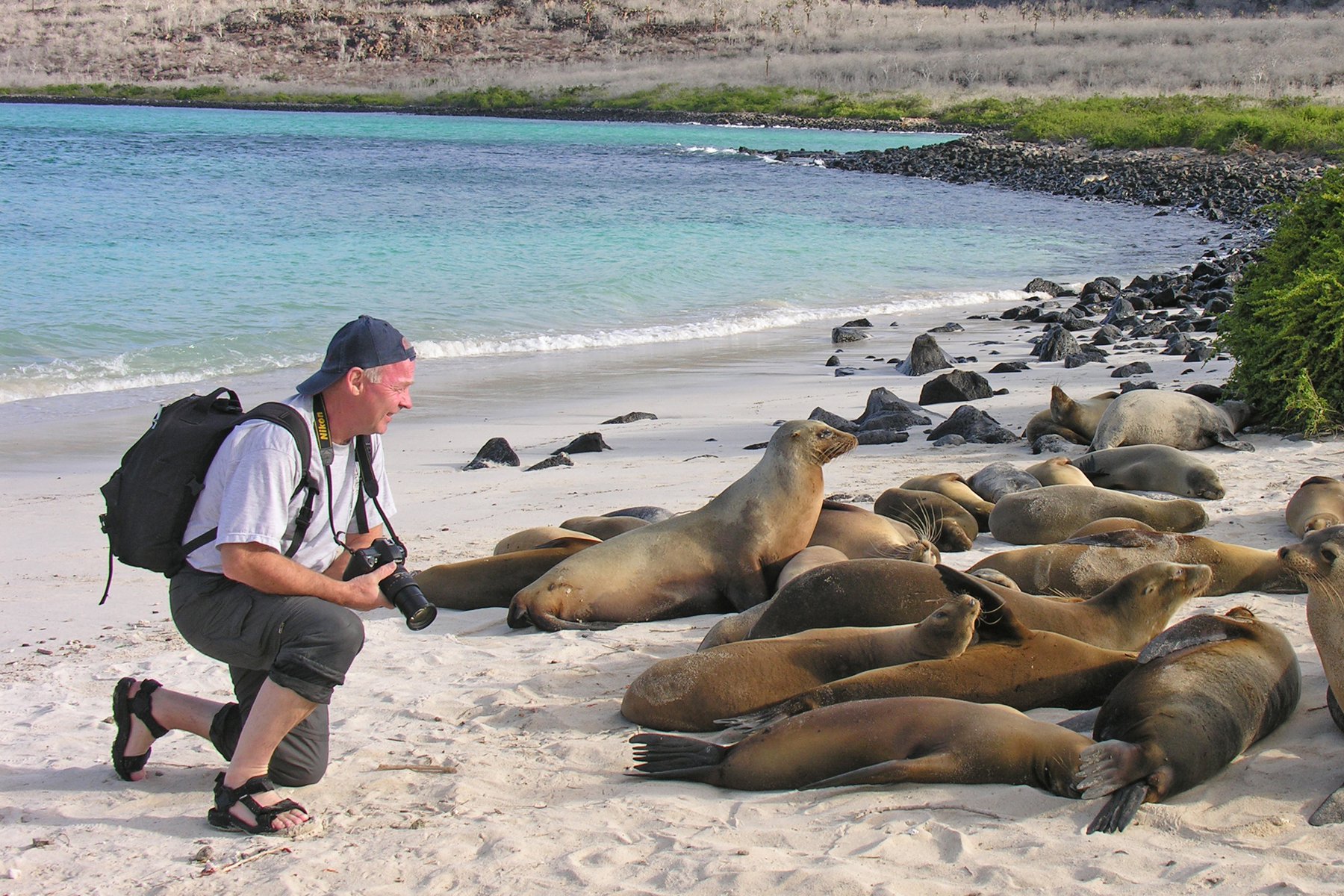
By air to Baltra, Galapagos. The flight takes about 1,5 hours and you will arrive at the Galápagos archipelago around noon. At the airport, a representative from the cruising company will meet you and follow you to the boat which will be your home during the next five exciting days. All meals, coffee/tea and water are included during you voyage but if you want to drink soft drinks, wine or beer they will charge you extra for this. All excursions are included in the price. You start your odyssey at Bachas Beach, a common first landing site. It´s a popular place for swimming but also makes a good introduction to wildlife, with marine iguanas, hermit crabs, black-necked stilts, great blue herons and flamingos tiptoeing around the saltwater lagoon behind the smaller beach. From here you will continue to North Seymour which is situated north of Baltra. The visitor trail on North Seymour is approximately 2 km long and it crosses the inland of the island and explores the rocky coast. Along the way the trail passes colonies of Blue-Footed Boobies and magnificent Frigate birds. You will also see colorful yellow land iguanas.

Day 8, Isla Floreana (Galapagos)

Floreana is one of the oldest islands. Unlike the younger western islands, Floreana's volcano has been long extinct and is in the advanced stages of erosion. The erosion process gave the island the nutrients and soil needed to sustain plant life. The combination of this rich soil and a good water supply have given the highlands of Floreana a diversified landscaping of native and introduced flora. Floreana is best known for its colorful history of buccaneers, whalers, convicts, and colonists. In 1793 British whalers established the Post Office Barrel to send letters to and from England. This tradition has continued over the years, and even today visitors may drop off and pick up letters, without stamps, to be carried to far destinations. In the 1930's Floreana was the setting for intrigue and mystery. A German dentist and his mistress, a young family (the Wittmer family who still live on the island) and a self-styled Baroness with three men came to settle in the island. Shortly after the baroness and her lovers arrived chaos began. They terrorized the other inhabitants while planning to build a luxury hotel. At Punta Cormorant there is a greenish beach, due to the accumulation of olivine crystal mineral. Sea lions swim and play around while you enjoy a good snorkel. The trail goes to a white sand beach which is a nesting area for Green Turtles, Stingrays and White-tipped reef sharks swimming where waves crash, being visible from the shore. Devil's Crown is a half-submerged volcanic cone, considered to be one of the most outstanding marine sites of the Galapagos Islands.

Day 9, Isla Española (Galapaogs)

Isla Española (Hood) is the oldest and the southernmost island in the chain. The islands remote location helped make it a unique jewel with a large number of endemic creatures. Secluded from the other islands, wildlife on Española adapted to the island's environment and natural resources. Marine Iguana's on Española are the only ones that change color during breeding season. It is the southernmost island of the archipelago and because it is so isolated, it has a high proportion of endemic fauna. Gardner Bay offers a great possibility for the visitor to enjoy some beach time in the Galapagos. Here, the extroverted mockingbirds sit on top of visitor's hats, peck at their feet and investigate their belongings. Punta Suarez is one of the most popular and attractive visits of the Galápagos Islands. The quantity and variety of wildlife at this site is remarkable. When landing, young sea lions surf the breaking waves, boobies nest almost right on the trail, Galapagos Doves peck around unaware of visitors and finches go about their business in the bushes. The trail continues toward the cliffs and the blowhole, a fissure in the lava where water spurts high in the air like a geyser.

Day 10, San Cristobal (Galapagos)

Early in the morning you get to see Kicker Rock or Sleeping lion, a rock formation, located on the coast of Isla San Cristobal in the Galapagos Archipelago. It is a magnificent island in the middle of the sea, rising 152 meters from the ocean, is shaped like a giant sleeping lion, hence its name. The rocks are remains of a vertical formation of tufa, and is a favorite place for various species of seabirds. The fifth largest of the Galapagos Islands in terms of size, Isla San Cristobal has the second largest human settlement of this volcanic island chain. Also known as Chatham Island, Isla San Cristobal is important because it is home to the provincial capital of the Galapagos, Puerto Baquerizo Moreno which sits on the island's southwestern end. About a kilometer and a half from the town of Puerto Baquerizo Moreno is Cerro de las Tijeretas or Frigatebird Hill. Reached via a well marked out walking trail, this spot is the nesting ground for a number of Frigatebird species. There are gret views for up here.

Day 11, Santa Cruz (Galapagos)

You will return to Santa Cruz, the island where this odyssey began and there you will have time to explore Puerto Ayora. You will also visit Charles Darwin Station. There will be time for you to walk around in this scientific station and you will hopefully se the giant tortoises - the symbol of Galápagos. In the afternoon you go to Baltra and from there you'll take the flight bound for Quito.

Day 12-13, Iluman

You'll take the bus north to Iluman from Quito. It's a nice bus ride and you will be able to admire the Andes. Iluman is a small craft village outside of Otavalo. This is a place where you can relax, get to know people and feel the atmosphere. It is a place to sit down outside the hotel; saying hello to the people passing by. Iluman will be your base from where you can make daily excursions. In many villages in the area people works with handicrafts, especially weavings. You will see the weavers work in many of the houses. Try to make contact with the locals. Probably some will invite you for a cup of tea and show their world famous crafts. Imbabura is known as the Lake province. From here you can discover the lakes and the cultivated landscape with corn, potato, wheat and barley around Mt Imbabura. The Otavaleños, Natabuelas and Caranquis are usually more open and easier to get in contact with than other indigenous people in the Andes. A 20 minute drive from Iluman, you will find the town Cotacachi, situated below the snow peaked mountain Cotacachi. In Cotacachi people are since long ago making traditional leathergoods. The mayor in Cotacachi is "worldfamous" for his democratic efforts and projects on all levels in the town. In the nearby town San Antonio de Ibarra, you can see the men carve wooden sculptures. From Cotacachi, it is 3-4 km to the Cuicocha Lake, a national park. You can go there by road or by horse. In the village of Agualongo, you will find many tapestry workers, and in Huacopungo, south of the San Pablo Lake, their main "industry" is carpets. In Otavalo you find the handicrafts that we commonly relate to South America. The Otavaleños have managed very well with their export business, mainly handicrafts, and many of them have earned enough to afford good education for their children. Many of them are not only successful businessmen but also well educated doctors, lawyers, etc. Therefore, many of them are not looked down upon as many other indigenous people in South America. They also have a very good reputation among many indigenous groups in South America. The market in Otovalo is a great experience. Every Saturday morning the Plaza de Ponchos is crowded with vendors. The artesanias (crafts) market starts at 07.00 and goes on until 18.00. This market is for sure spectacular! The Otovaleños not only sell goods they weave and sew themselves, but they bring artesanias from throughout Ecuador. There is also a Cattle Market every Saturday morning, it begins at 06.00 and last until 10.00 It takes place outside town in the Viejo Colegio Agricola. Ask Samuel how to get there. Even though the Saturday market is special, there is always an ongoing market at Plaza de Ponchos so don't despair if you miss the Saturday event.

Day 14-15, Village stay

Peguche, an indigenous Quichua community in Imbabura province just north of Otavalo, is surrounded by high mountains and inactive volcanos. The production of local arts and crafts is the main economic activity. The natives of this area, "Pegucheños", are pioneers in making and designing textiles and often travel around the world as handcrafts merchants.
Their skillful hands have inherited the Pegucheño traditions in weaving, creating marvelous textiles out of a diverse number of materials for tapestries, blankets, sweaters, jackets, purses and many other items. Pegucheño textiles are known world wide for their excellent quality and attractive designs. Peguche is also the cradle of famous Andean music and dancing groups like Ñanda-Mañachi, Centro Cultural Peguche, Jialli, Mashis, and many others. You'll find various shops that specialize in making single-reed flutes and rondadores (panpipes), as well as guitars and charangos (a mandolin-like instrument with five pairs of strings). Traditionally, the back of a charango is made from an armadillo shell. In Peguche, most of the Families are indigenous from the Otavaleño Ethnic group. They speak Quichua as their mother tongue. Most of seniors speak just their language. Young fellows are bilingual Quichua - Spanish and some adults speak Spanish with some accent or dialect. Most of the families base their economy in making handicrafts which are sold in the Indigenous Market in Otavalo City, located about 20 to 30 minutes walking from the community. Apart of this activity, mainly women work in their little farms plantting different types of corn, bean, cereal, potato and other Andean products. These families have a good economical situation, considering Ecuadorian and Indigenous standars, but this particular fact has not changed their traditions and cosmovision. Mainly women are still dressing traditionally, men just in specail occasions. Also, they are still celebrating their parties how their accesters did, such as Inty Raymy (party in honor of the sun), Paucar Raymi (party of flowering), and others; having a waterfall as sacred place for most of their rituals. Facilities at home are almost the same as wester standars, but there are things which are different. For instance, some families have two kitchens, one where they are still cooking with wood, and where they usualy have their guinea pigs; a second one where they have a regular stove where they nowadays cook in regular basis. Some families have their washroom outside of the house others inside. Most have an electrical shower which does not have same pressure of water and is not as warm as western people are used of. They have their animals as chickens, or pigs or cows, or sheep in their back yards or patios.

Day 16-17, Quito

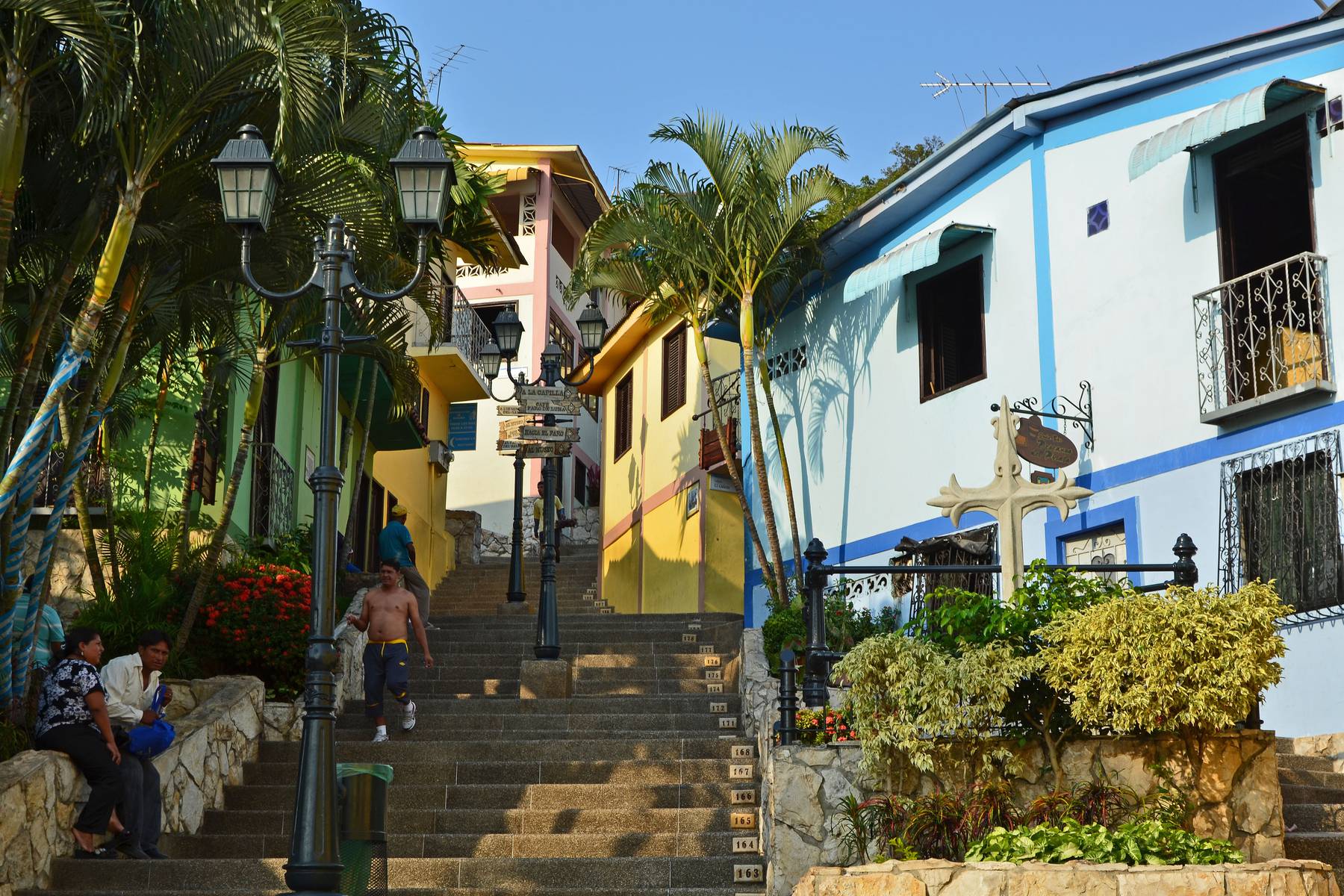
By bus to Quito. The capital of Ecuador is situated at 2.850 m.a.s, and it is the second highest capital in Latin America after La Paz. It lies in a narrow valley running north to south, wedged between the slopes of volcano Pichincha (4,794 metres) to the west and a steep canyon to the east, formed by the Machángara River. Quito has 1,8 million inhabitants and the city has grown rapidly during the last decades. Tourism has also increased rapidly, something that has visibly influenced the city. The capital has become more modern, not unlike many European capitals. But Quito has preserved its original Andean feeling. You will hear Quicha-speaking women in the bus queue and you will see indigenous people dressed in their traditional clothes while you´re strolling down the streets. Quito is divided in two parts, or lets say three parts. The Old Town, The New Town and Gringolandia. The Old Town is the cities highlight. It is a muddle of narrow streets and wide plazas lined with churches, monasteries, mansions and colorful balconied houses. Old Quito was declared as a UNESCO World Heritage Site in 1978. The city has some of the most beautiful colonial architecture on the continent and is inviting for long nice walks. The New Town is as the name gives a hint, an ordinary new town with a concentration of banks, hotels, restaurants, shopping centres and cybercafés. Luckily the main shopping streets are brightend up by numerous Otavaleño street traders, which gives the place a warmer atmosphere. Gringolandia is part of the new Town, here you'll find American fast food restaurants, nightclubs and hotels. You'll have two days in the capital and if you're not too tired there are plenty of things to explore. Ecuador has got its name after the equator so why not go to the monument in order to see the magic line? Another nice place to visit is El Panecillo, which is a high hill from which you have a wonderful view over the city. The tour is finished in Quito.