
Senast uppdaterad: 2012-04-20
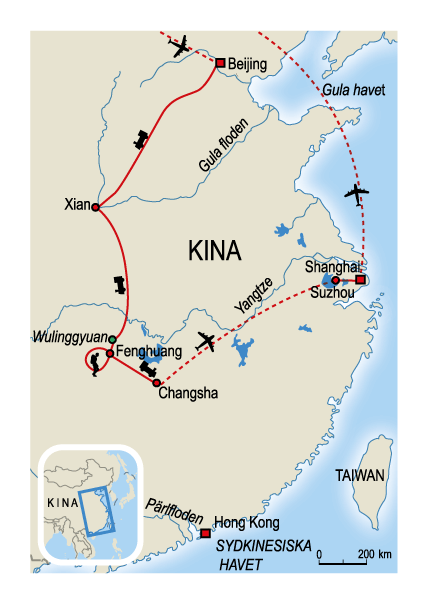
Itinerary
Day 1-3
Beijing is the capital of China since 1279. There are many historical points of interest; whereof the Forbidden City 故宫, the Summer Palace 颐和园, Temple of Heaven 天坦公园 and the Great Wall 长城 are the most important.
From the hotel it is possible to take a walk to the Tiananmen Square 天安门广场 and the Forbidden City 故宫. North of the Forbidden City there are a series of parks starting with the Jingshan Park 景山公园 just across the street from the northern gate of the Forbidden City. From the top of the hill of Jingshan Park you get a good view of Beijing and the Forbidden City. Further to the west you will find the Beihai Park 北海公园, which is very popular among Beijingers for skating in the wintertime. Beihai means the Northern Sea. Just south of Beihai is Zhongnanhai 中南海 (Middle and Southern Sea). That is the part of the government area where most of the high rank leaders work and live. It is often called the Forbidden City of the Modern China, since it is not open for ordinary citizens to visit - just as was the Imperial Forbidden City.
North of the Beihai Park, there are a few more lakes surrounded by parks; Qianhai 前海 (the Front Sea), Houhai 后海 (the Back Sea) and Xihai 西海 (the Western Sea). This part of Beijing is quiet and nice for a stroll along the lakeside. Older men are fishing, others are playing table tennis, yet others go for a swim in the water. Close to Houhai you can find some small tea houses 茶馆 where tea is served in the traditional way. There are also many cafes and restaurants. In the area of these lakes there are also some museums and parks worth visiting. Prince Gong's Residence 恭王府 has a traditional Chinese garden and Chinese styled buildings, as has the former residence of Song Qingling 宋庆龄故居.
The city centre of Beijing has a mixture of narrow alleys and modern shopping areas. A traditional Chinese house is built in a square with a courtyard in the middle, siheyuan. Towards the alley there are no windows but just a high wall and a closed gate. Some of these courtyards are well preserved and it has become very popular and exclusive to live in such courtyard houses. There are also many old houses in very bad condition in the alleys. Most of the ordinary people living in the alleys do not have private toilets but have to use the public toilet in the neighbourhood. The Beijing authorities are very keen on tearing these areas down to get space to build hotels, shopping centres and office buildings.
Beijing is changing rapidly and it seems as almost all city is under re-construction. Many new buildings were constructed for the Olympics, such as the famous Bird nest and the Water Cube. And new subway lines have opened. The new Beijing has lots of high-rise buildings, roads in three layers and a great deal of neon and modern architecture. The most modern part of the city centre is situated around the Wangfujing Street 王府井大街. Jianguomenwai Dajie 建国门外大街 is another area with several large shopping centres, such as the Friendship Store 友谊商店. Not far from the Friendship Store, to the East, you will also find the famous Silk Alley 秀水市场 where you can buy clothing garments of all kinds, only some of them made of silk. Another good place for shopping is the Hongqiao Market 红桥市场 just north of the Eastern Gate of Tiantan Park. The Hongqiao Market is no longer a regular market in the street, but a modern four storey-building where everything from CD-players to pearls are sold.
The Tiantan Park 天坛公园 is one of the largest parks in Beijing. In the middle of the park you will find the Temple of Heaven (Tiantan 天坛) which was one of four important temples where the emperor made annual offerings. In each direction from the Forbidden City you will find each of these temples. To the North; Temple of Earth (Ditan 地坦). To the West; Temple of Moon (Yuetan 月坦). To the East, not far from Friendship Store; Temple of Sun (Ritan 日坦). Temple of Heaven, which is to the south was the most important of these temples since the emperor was regarded as the son of heaven.
In most parks there are a lot of activity in the mornings. People gather to do any kind of exercise; taiqi, qigong, dancing and even singing opera. In some parks old men bring their bird cages and let the birds sing together while the men chat away. Tiantan Park 天坛公园 is probably the park with most morning activities of all. It is quite an experience to walk around in the park in the early morning surrounded by all the activity. In the evenings you can visit an acrobatic show or a performance of Peking Opera. The Lama Temple, Yonghegong 雍和宫, is a nice a quiet temple well worth a visit.
There are a variety of interesting foods to be tried in Beijing, both local food and from other parts of China. Some local specialities you should try are jiaozi 饺子 boiled dumplings filled with pork or vegetables, and lamian 拉面 - fresh noodles, which they make while you wait. Beijing duck 北京烤鸭 is another must. Korean barbecue has become very popular among the Beijingers. You barbecue your own meet at you table. Yet another special dish for Northern China is Mongolian Hot Pot or shuan yangrou 涮羊肉. A pot of boiling water is placed on your table and you will cook your own mutton meet and vegetables and dip it in a sauce made of sesame paste, coriander and other spices. Traditionally, mutton meet is used (yangrou = mutton) but any meet or seafood will be available. This dish is most popular in the wintertime when northern China is very cold and friends gather around the hot pot for a meal.
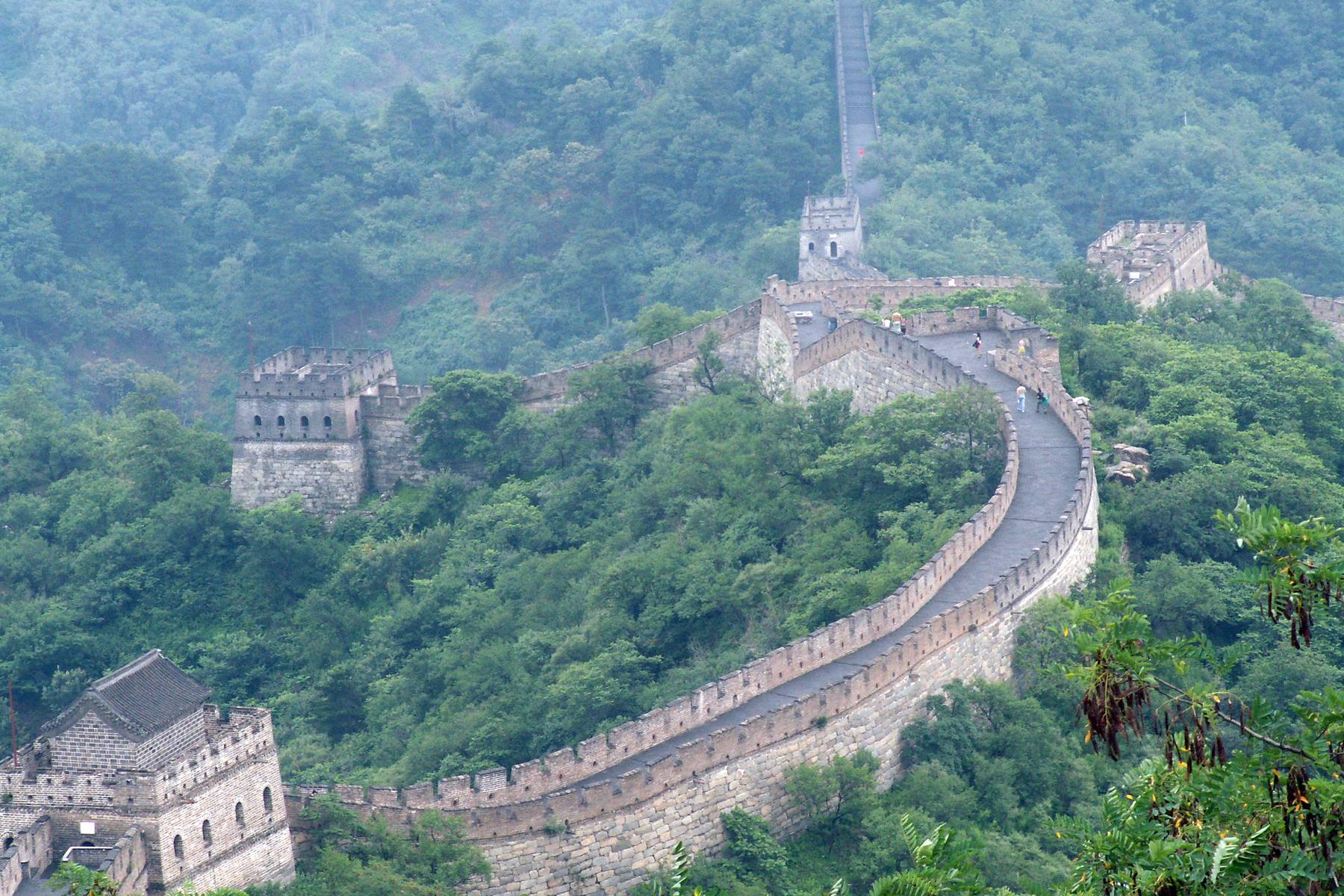
There are several spots where to visit the Great Wall 长城, some very crowded, others quite empty. Most "tourist stations" at the wall has a cable car to take you up to the top. Simatai 司马台 is warmly recommended. Go early in the morning if possible. From Simatai you can walk on top of the wall for 4-6 hour until you reach Jinshanling 金山岭.
In the evening day 3 you'll catch the night train to Xian. You will travel second class, which is also called "hard sleeper". The beds are not as hard as it sounds. There is a pillow, blanket and clean sheets. In Chinese hard sleeper the carriages are open and divided into separate sections with six berths in each. The Chinese trains are a place to meet people indeed. There is plenty of time to start conversations and many people are curious. Be prepared to reply questions about your marital status, your age, how many children you have etc. There is probably a restaurant in the train. You could also buy one of the boxes of rice and vegetables that they sell on the train. There is always a free supply of boiled water on the trains so bring a mug and tea or coffee. Or perhaps a bowl of instant noodles. Most often the nights on the train are quiet and you can sleep well.
Day 4-5
You will spend two days in the historical city of Xian 西安, that was the capital of the Chinese Empire for more than 1.000 years. At that time it was the biggest city in the world. Nowadays it is the capital of the Shaanxi Province. Both in and outside the city wall you will find reminders of the town's mighty period. The Big Goose Pagoda 大雁塔, the Small Goose Pagoda 小雁塔, the Bell Tower 鼓楼, the Great Mosque 大清真寺 are some of them. An old city wall surrounds the old city centre. You can walk on the wall almost all the way around town. You can even rent a bicycle on top of the wall and ride for a bit! In the night time, several areas of the city are transformed to huge night markets with food stalls. An interesting way to try the local food.
When in Xian, a visit to the Terracotta Army 兵马俑 is a must. The army of terracotta warrior statues guarding the tomb of the first emperor Qin Shi Huangdi's was discovered by a local farmer in 1974. Do not miss the introduction film showed in the circular theatre. To get to the Terracotta Army it is very convenient to take the bus from the railway station.
Banpo 半坡博物馆 is the name of a 6000 years old settlement from the early Stone Age that was found in the outskirts of Xian. The excavation is displayed in a museum. It is very interesting and well worth a visit, even though the museum is not very modern. The Shaanxi History Museum 陕西历史博物馆, on the contrary, is a modern museum. Its exhibition displays the rich history of China and you get to realise how important the Xian region has been as the cradle of Chinese civilisation. Unfortunately, only a few signs are in English, but it is still worth a visit.
Outside of Xian there are a couple of nice day trips apart from the Terracotta Army. Hanyangling 汉阳陵, north of Xian, is a newly discovered imperial tomb from the Han Dynasty. Emperor Jingdi's tomb was also surrounded by groups terracotta figures, but these ones are miniature copies of animals and soldiers. There is a nice and modern museum to exhibit the excavations. In the old capital of Xianyang 咸阳 there is yet another museum for miniature terracotta soldiers. They are not as famous as the large ones, but quite impressive just the same. Apart from this there are dozens of old imperial tombs all over the area. However, they are usually not very much to see.
In the evening there are music and dancing performances at several theatres in town. One of those is the Shaanxi Grand Opera House 陕西歌舞大剧院, which has a beautiful show from the Tang Dynasty.
In the evening day 5, departure by night train to Changde in Hunan province.
Day 6-7
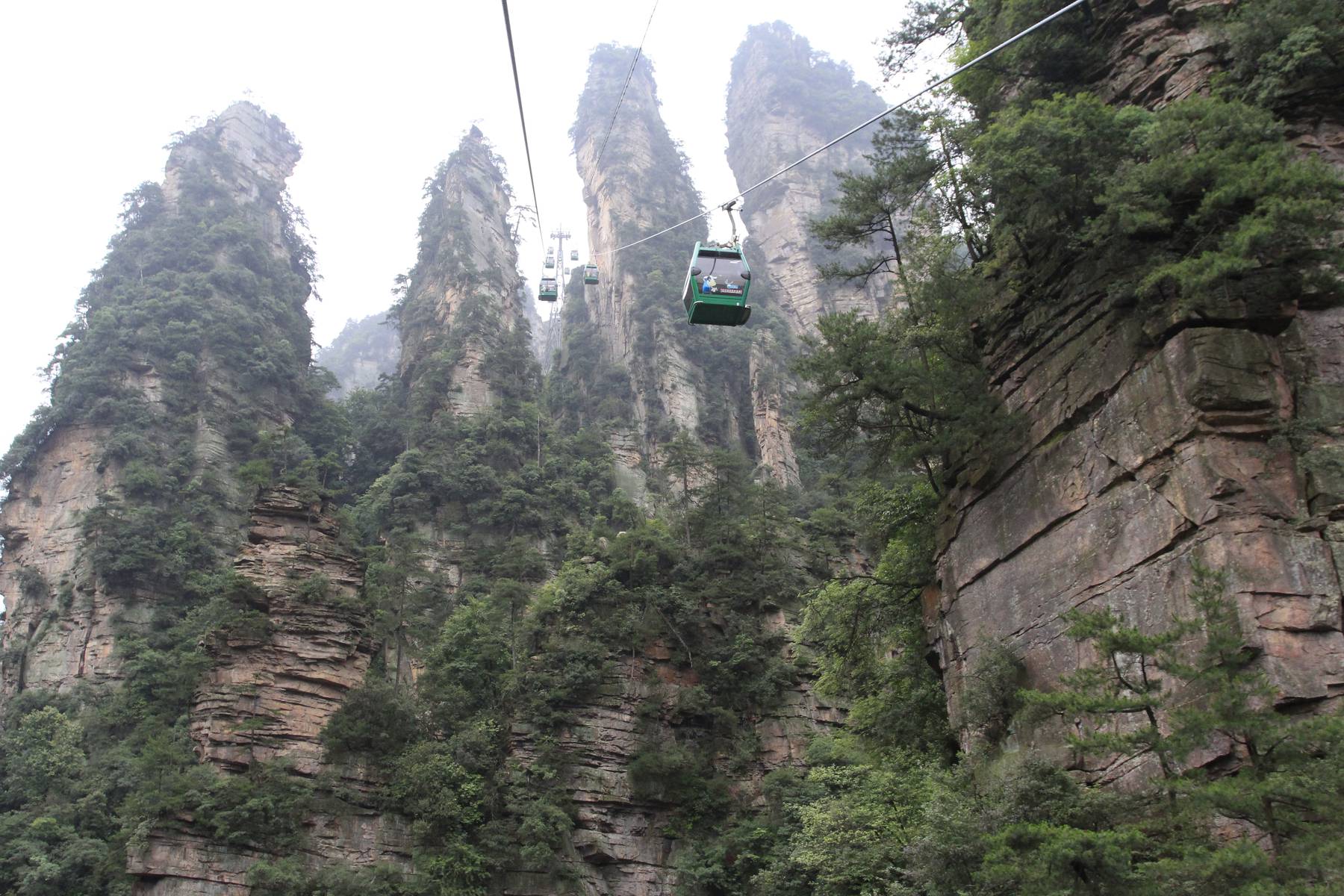
When arriving in Changde you'll get on another train to Zhangjiajie 张家界 and finally bus to the Wulingyuan Nature Reserve 武陵源风景区. You'll reach the nature reserve in the afternoon.Wulingyuan was listed at the UNESCO's list of world heritage in 1992. The area is vast and includes more than 3.100 peculiar limestone formations. Thousands of years ago the ocean covered this part. Erosions of wind and water continuously reshaped these mountain (somewhat like gotländska raukar, but much taller). Some of them are as high as 500 or 600 metres. This nature reserve is not well known among Westerners. It is far less famous than Guilin and The Stone Forest outside Kunming, but probably more interesting and definitely more dramatic. Among Chinese tourists it is however well known.
You will spend two half days in the park. There are two main peak areas; Huangshi 黄石, not far from your hotel; and Tianzishan 天子山 a few hours walking away from the hotel. For both areas you may take the cable car up. Take a walk on top of the ridge. From the mountain ridges the panorama over the peaks is truly majestic! Walk down hill or take the cable car back down again. Part of the way is quite steep and some parts even have stairs. If you prefer you can also walk up and take the cable car down. To get from the hotel to Tianzishan there is a nice and flat walk along a river canyon.
In the evening day 7 you'll go back to Zhangjiajie to spend the night there in a hotel.
Day 8
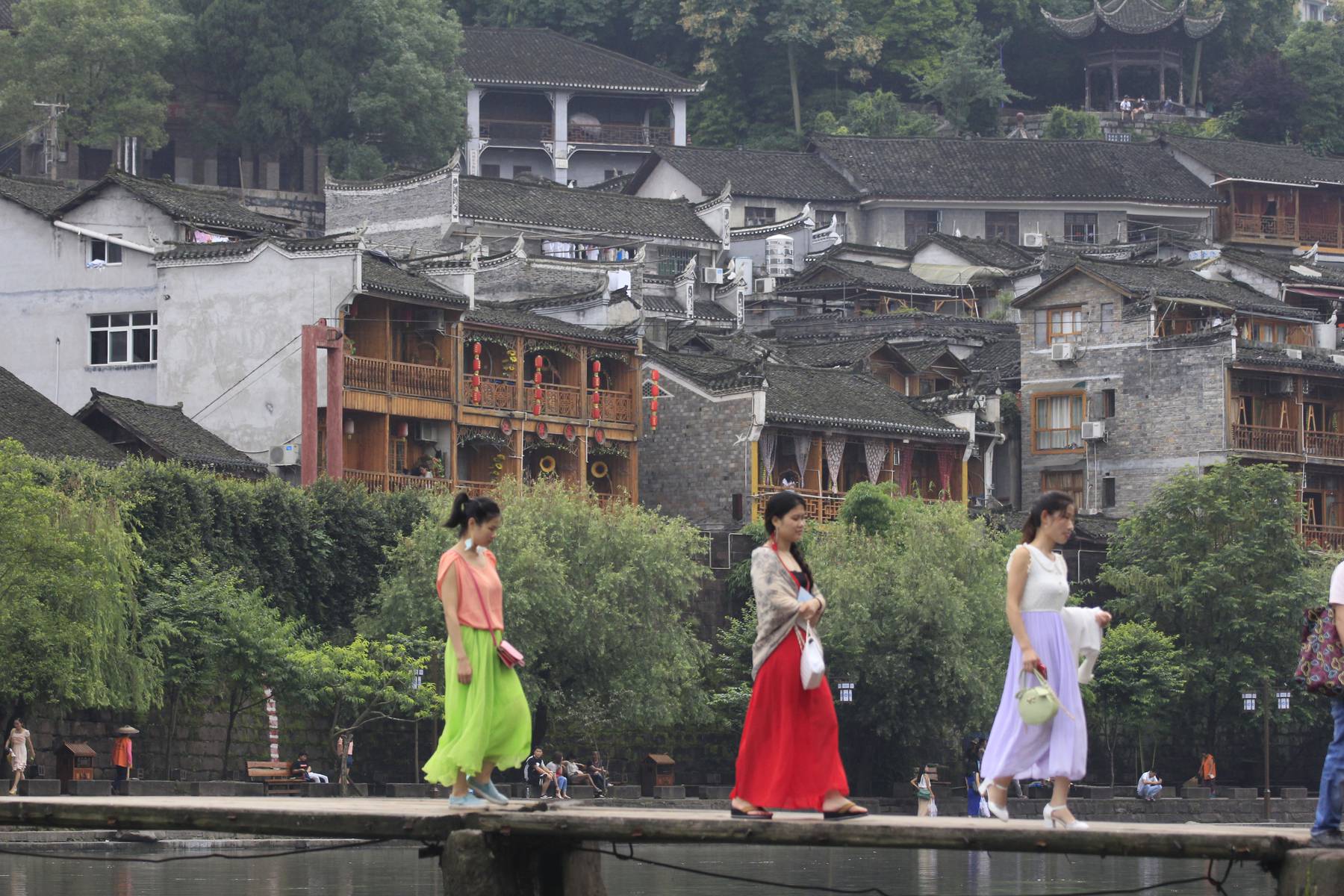
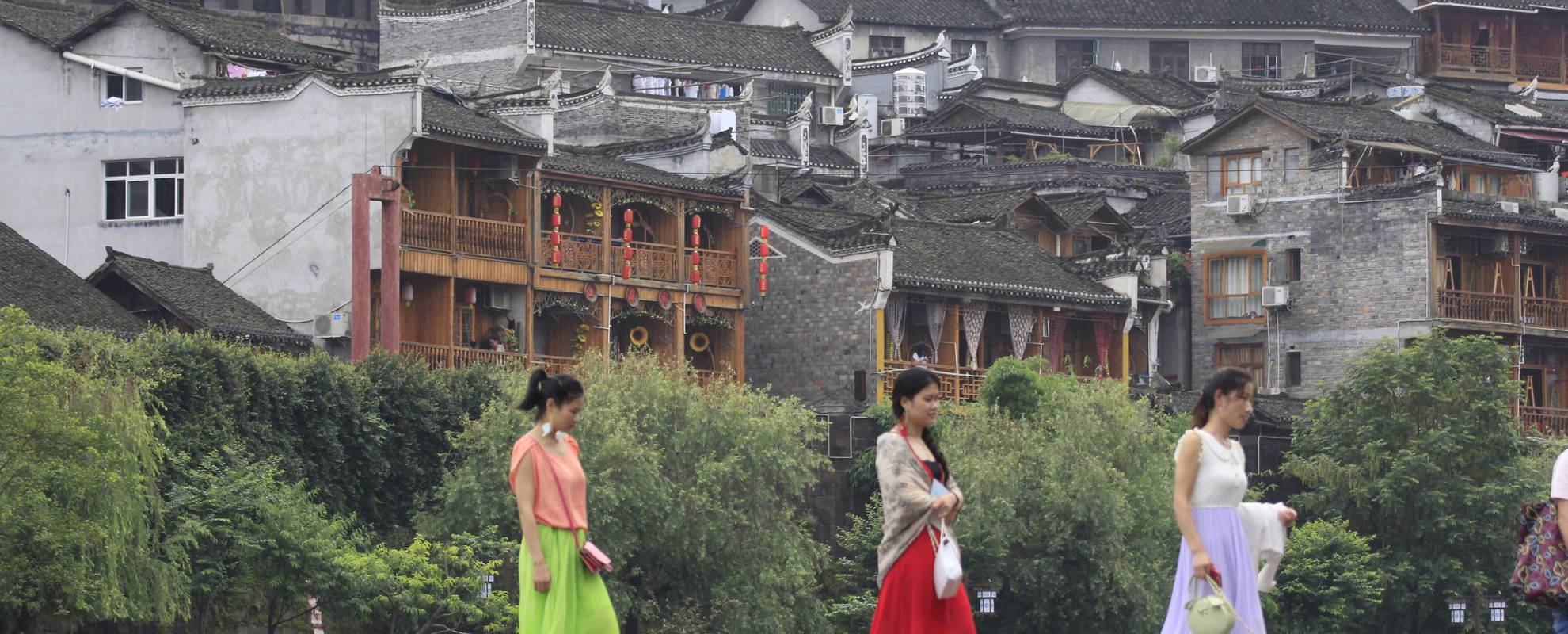
Early morning bus to Fenghuang. Very few foreigners visit West Hunan. This is remarkable since it is one of the most beautiful and peculiar places in China. The topography of east China is quite flat, but starting from Hunan the country is gradually getting higher and higher the further west you go. This is also the place where you first encounter some of China's many ethnical minorities, since there were enough mountains to hide from enemies. West Hunan is among the poorer districts in China. The big majority of the people are farmers.Fenghuang 凤凰 is the old capital of this area and a former military stronghold. You will see a town that was once very rich. All the gates still stand intact and inside the town there are only cobbled alleys and exquisite houses with big gardens. A river, Tuo River, flows through the town. The old city wall along the riverside has been renovated and the old city centre is closed for car traffic, which makes it a pleasant town for strolling around. Early mornings are interesting with people carrying the fresh vegetables to the market, women doing the family laundry by the river, and both young and old people gathering at the riverbank for some morning exercise.
Day 9-10
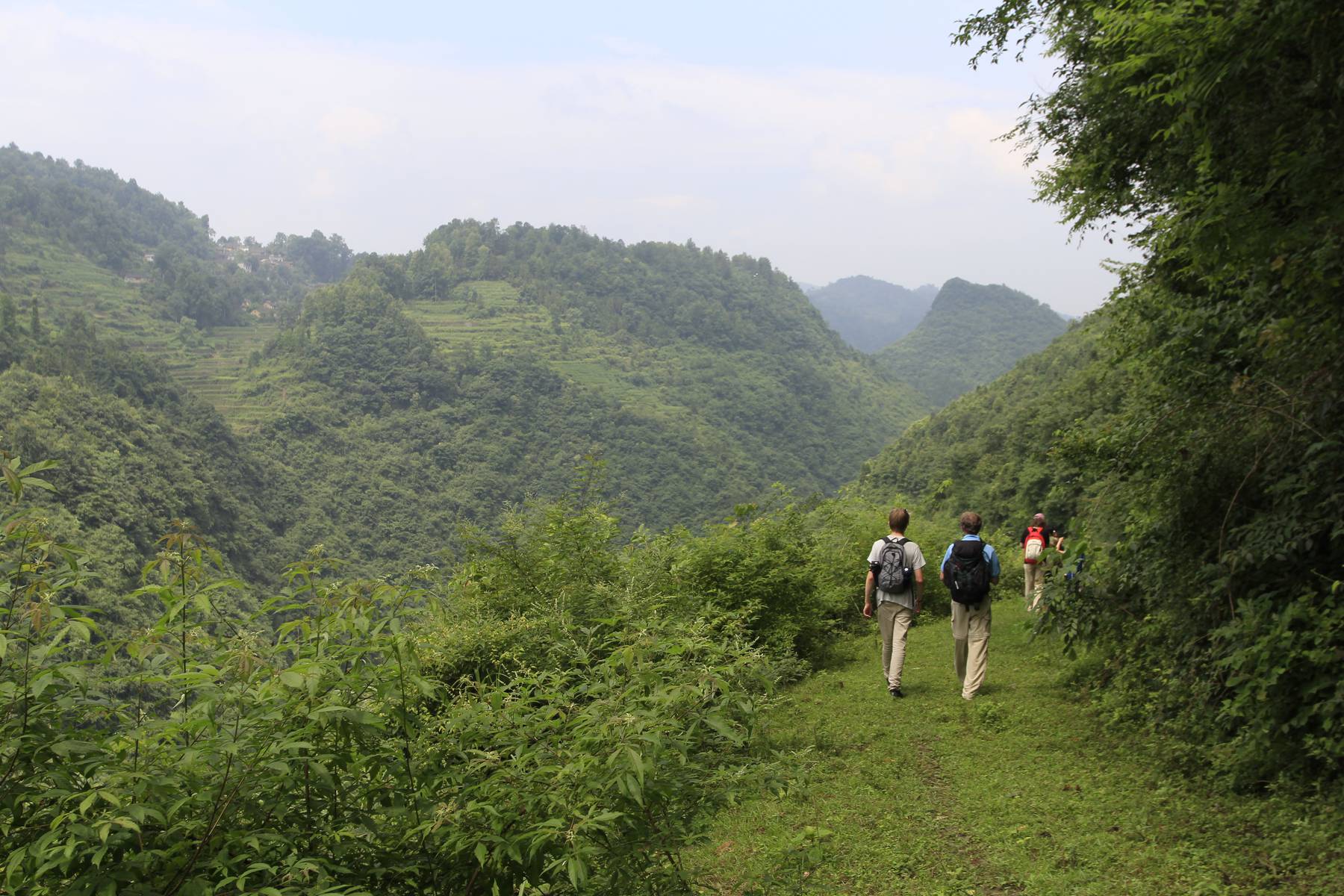
During two days you will visit the countryside outside of Fenghuang. Hunan area was originally not inhabited by the Han Chinese people but by several other ethnic groups, primary Miao people. When Fenghuang was established as a military post by the Han Chinese, a wall was built, stretching 100-km northeast, to keep the other tribes away. The wall is gone now, but an invisible border still exists. The Miao people live northeast of this border. One part of the wall has been reconstructed and by the name of The Southern Great Wall attracts many Chinese tourists.You will start the two-day trip by taking the local minibus out of town for 30-50 minutes. From there you will start walking. You will be able to leave the major part of your luggage in Fenghuang and carry along only a small back-pack with the stuff that you will need for the night. The landscape is green and hilly. You will walk on paths and between the rice and tobacco fields. The Miao people have a tendency to build their villages on top of the mountains, and some of them require quite an effort to reach. There are villages every 2-3 kilometres and you walk mainly through terraced rice fields or on small paths overlooking the farmland. Sometimes you have to cross a river before rising to the village on top of the other mountain. Foreigners seldom visit these villages and your presence might cause a bit excitement. It is very important that you keep your patience and respect their curiosity and way of living.
You will walk for about 2 hours the first day, and about 2 hours the second day. The night you will stay in one of the Miao villages. The local people are friendly, curious and hospitable and will welcome you to stay in their house. The standard of living is often simple but not extremely poor. The land is fertile and the climate is propitious for good harvests. However, Hunan is one of China's poorest provinces. You will stay 2-3 people in each family and eat dinner with your host family. The conditions in the village are of course very simple. No running water, only simple dry-closet, and simple, hard beds. You will be able to experience what life is really like for the vast majority of the Chinese population, even if it is for one night only.
The next day you will continue walking for about 2 hours until you will reach the main road from which you will go by local bus back to Fenghuang. In the small towns around Fenghuang, there are farmer's markets almost every day, each town has different market days. A visit to such a market is worthwhile indeed. People from the neighbouring villages, many of them Miao people, come down from the mountains in their most colourful clothes to do trading in pigs, cows, embroidered clothes, silver jewellery, straw hats etc along with other common daily life things. Depending on the Chinese calendar you will perhaps be able to visit one of those markets on the way back to Fenghuang. You will stay one more night in Fenghuang, at the same hotel as before.
In case you do not want to do the trek in the countryside, it is of course possible to stay in town and do excursions on your own. If so you will have to pay your own accommodation.
Day 11
You have almost the entire day in Fenghuang. One of China's most famous authors, Shen Congwen 沈从文 origins from this town. His residence in the central part of the town is well preserved and is kept as a museum. The books of Shen Congwen are probable the best guidebooks you can get of the area, since all his stories take place in West Hunan. Some of his books are translated into Swedish and can be found at libraries. Or you can buy the English versions in any of the bookstalls in Fenghuang. For instance at the Dongmencheng Bridge 东门城楼.
Apart from the old residence of Shen Congwen, there are several other old, traditional houses opened as museums as well as a few small temples. There are few Western tourists in Fenghuang, and all the signs are in Chinese therefore the museums can be a little hard to find. Do not hesitate to just walk into open doors and it might be a museum that you have found. Outside Fenghuang it is also possible to go river rafting.
Day 12-13
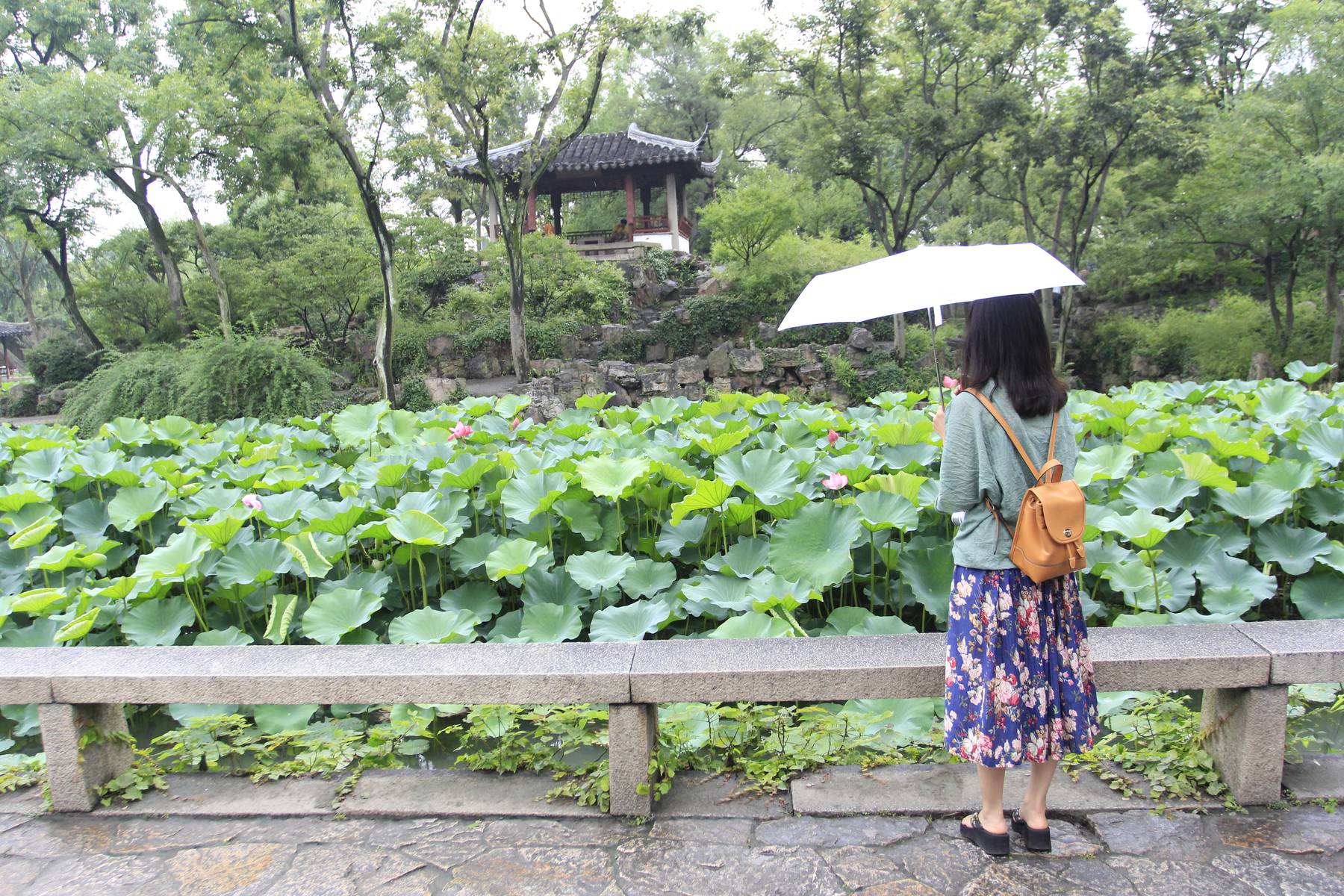
Early morning flight to Shanghai and directly to Suzhou 苏州.Suzhou is famous for its classical gardens. Zhuozheng Yuan 拙政园 (Humble Administrator's Garden) and Liuyuan 留园 (Lingering Garden) are among the four most famous classical gardens in China. Walk around and enjoy the beauty of these famous gardens. Totally the city has 9 different gardens that are listed as UNESCO World Heritage Sites.
Tiger Hill 虎丘 is also a popular destination for visitors and is known for its natural beauty as well as historical sites. The hill is so named because it is said to look like a crouching tiger. The hill has been a tourist destination for hundreds, if not thousands, of years, as is evident from the poetry and calligraphy carved into rocks on the hill.
In Suzhou you can also visit some beautiful temples. Hanshan Temple 寒山寺 (Cold Mountain Temple) is a Buddhist temple and monastery in Suzhou. It is located near Fengqiao 枫桥 about 5 kilometres west of the old city of Suzhou. Xuanmiao Temple 玄妙观, originally built in 276, is a prominent Taoist temple with a long history, located at the center of old Suzhou city. The street along east-west direction in front of the temple is called Guanqian Street 观前街, a famed business pedestrian street in Suzhou.
Within the city of Suzhou, there are also areas featuring canals. Both 800 yearold Pingjiang Road 平江路 and 1 200 year old Shantang Road 山塘街 made it to the list of China's "famous history and culture streets", and both feature elegant bridges, flowing waters and unique architecture.
The city is good choice for making your way around on a bicycle. Our tour leader can help you organize this.
Day 14-15
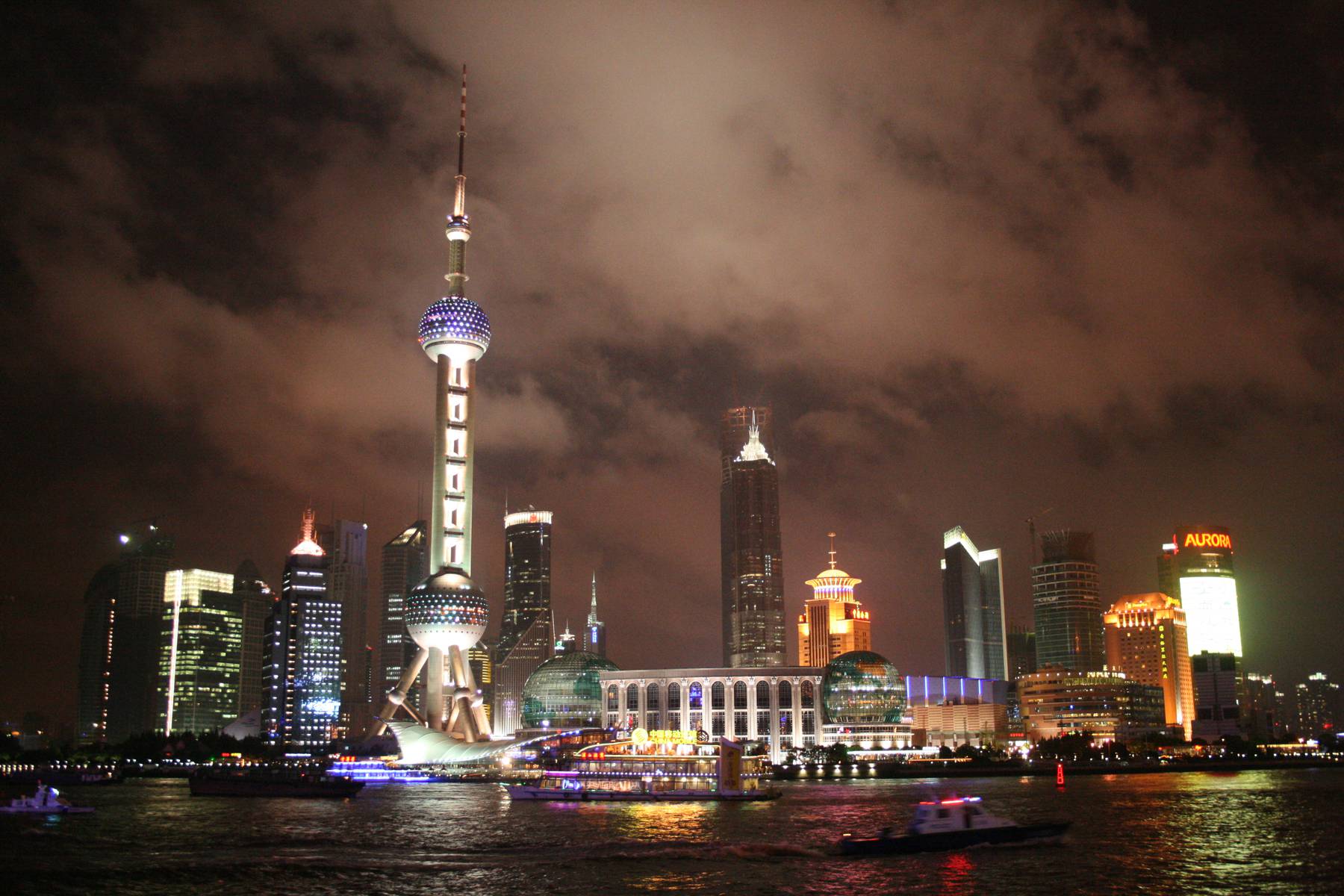
Shanghai 上海 is the largest city by population in China, with a total population of over 23 million (2010). Due to its rapid development over the last two decades it has again become a leading global city, with significant influence in commerce, culture, finance, media, fashion, technology and transport. Shanghai is now a major financial center and the busiest container port in the world. The city is located in the Yangtze River Delta in eastern China. Shanghai is also a popular tourist destination renowned for its historical landmarks such as The Bund, City God Temple and Yuyuan Garden, as well as the extensive and growing Pudong skyline. It is described as the "showpiece" of the booming economy of mainland China.Shanghai is a fascinating mix of East and West. It has historic shikumen 石库门, houses that blend the styles of chinese houses with European design flair, and it has one of the richest collections of Art Deco buildings in the world. As there were so many concessions (designated districts) to Western powers during the turn of the 20th century, in many places the city has a cosmopolitan feel.
Shanghai is split in two by the Huangpu River 黄浦江. The most basic division of the area is Puxi 浦西, west of the river, versus Pudong 浦东, east of the river. Both terms can be used in a general sense for everything on their side of the river, but are often used in a much narrower sense where Puxi is the older (since the 19th century) city center and Pudong the mass of new (since the 1980s) high-rise development across the river.
Shanghai has numerous places of interest; museums, temples, gardens, cafées and shopping areas. The metro is a very efficient way to get around although walking around is a better way to get to know the city. If you're flying home from Shanghai you could get to the airport using the Maglev train. Riding the Maglev may be quite a memorable experience if fast trains are of interest. Using magnetic levitation technology, it does not touch the tracks and traverses 30.5 km in as low as 7 minutes, while hitting a maximum speed of 431 km/h.
Day 16
Tour ends.