
Senast uppdaterad: 2011-12-19

Itinerary

Day 1

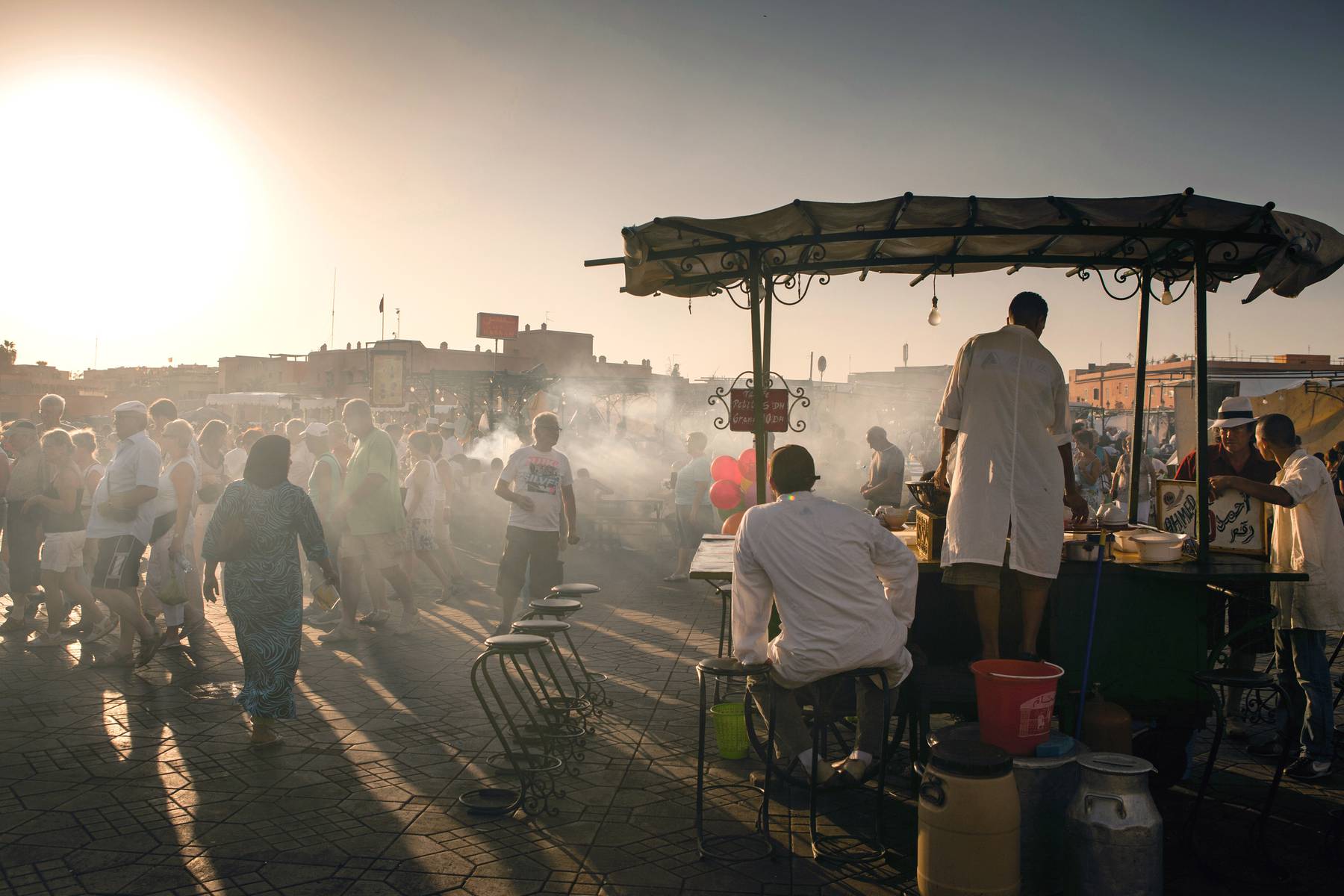
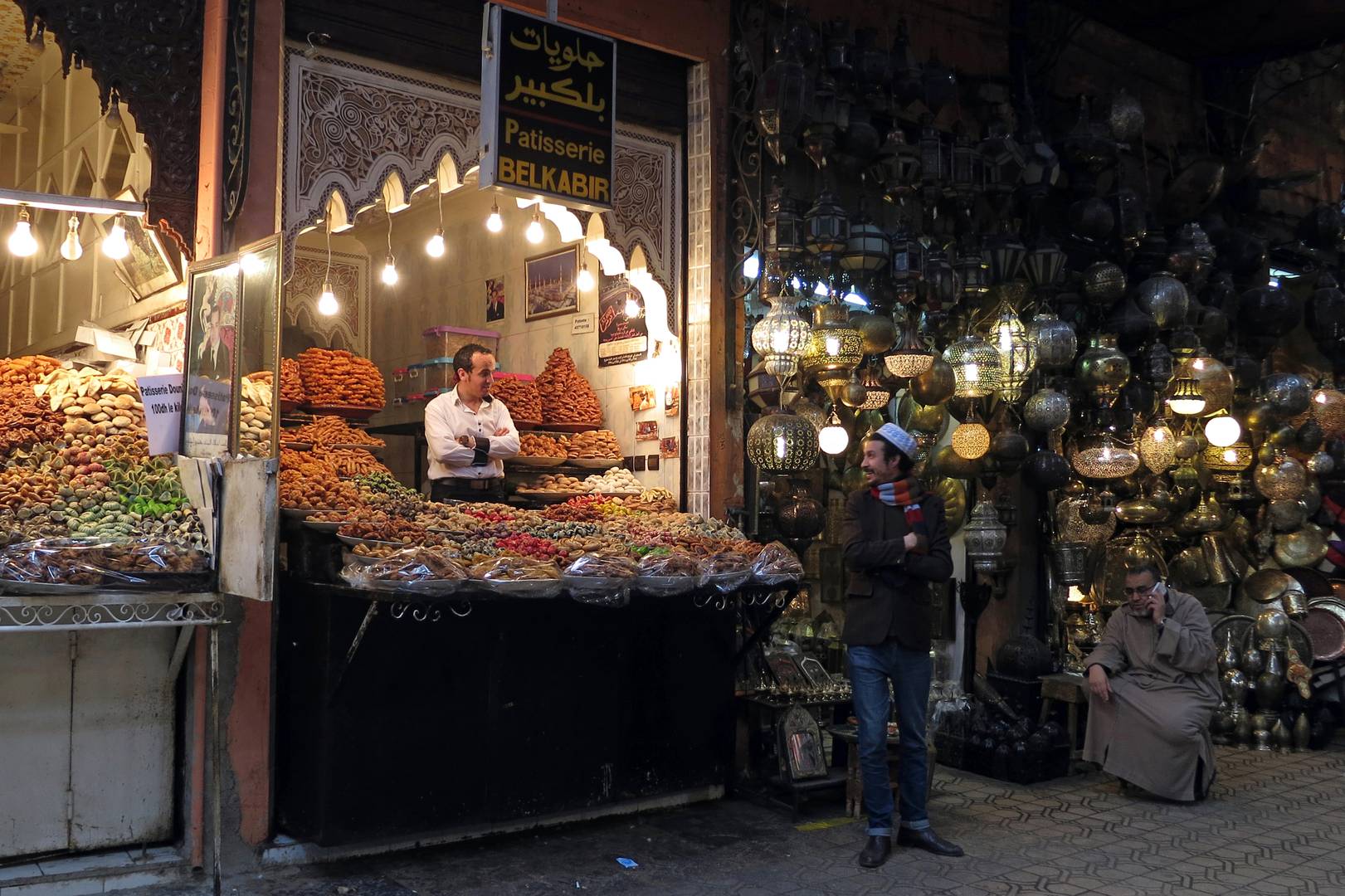
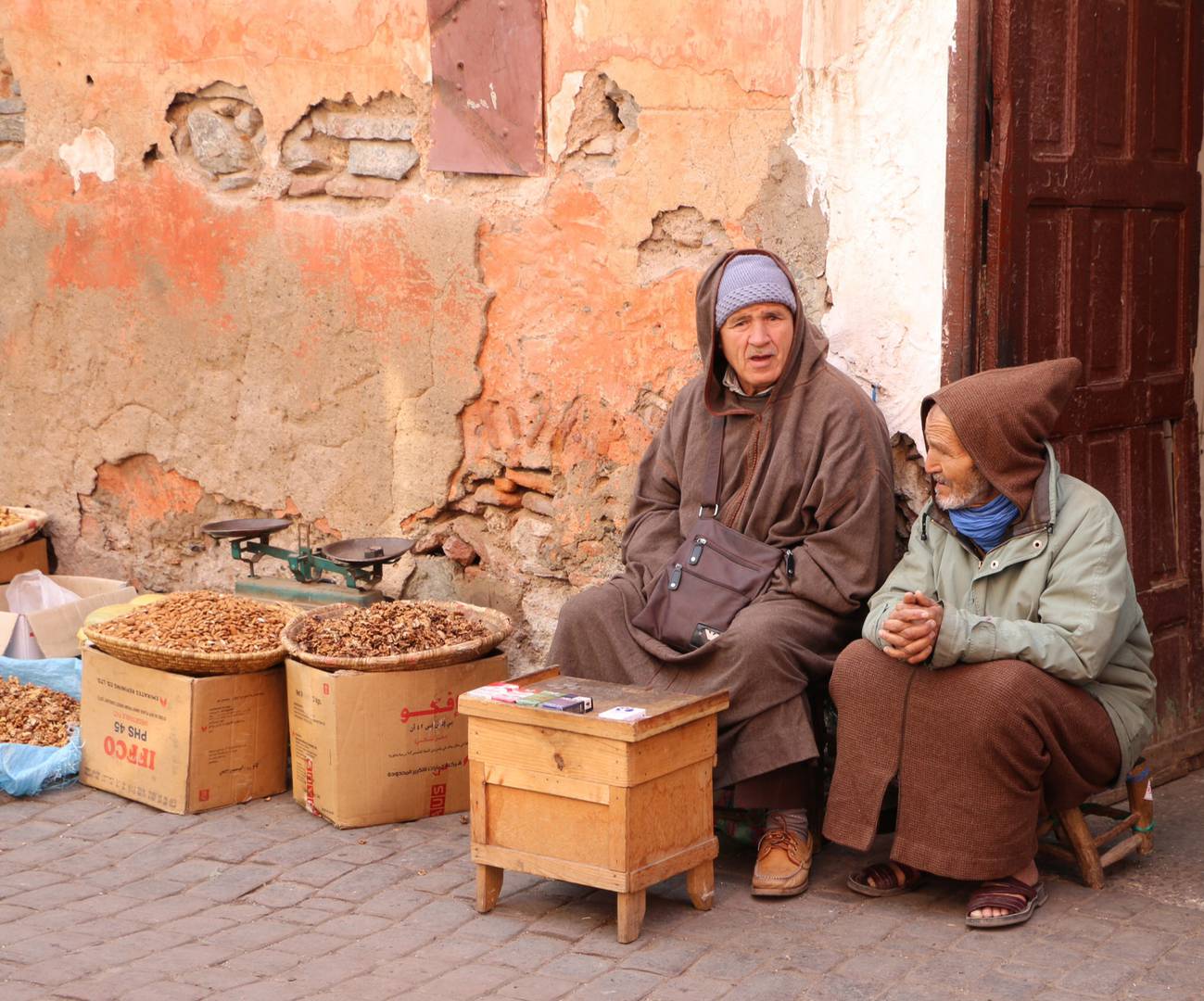
Day of arrival. Most probably you arrive by air and you land at Menara Airport (RAK) some 6 km outside town and 20 minutes by taxi. We gather at our hotel in Marrakech. Our hotel is right in the center of Marrakesh just beside Djemma el-Fna, the big town square, with ambulating restaurants that pop up each night, and you will probably have your first Moroccan dinner here.

Day 2-3

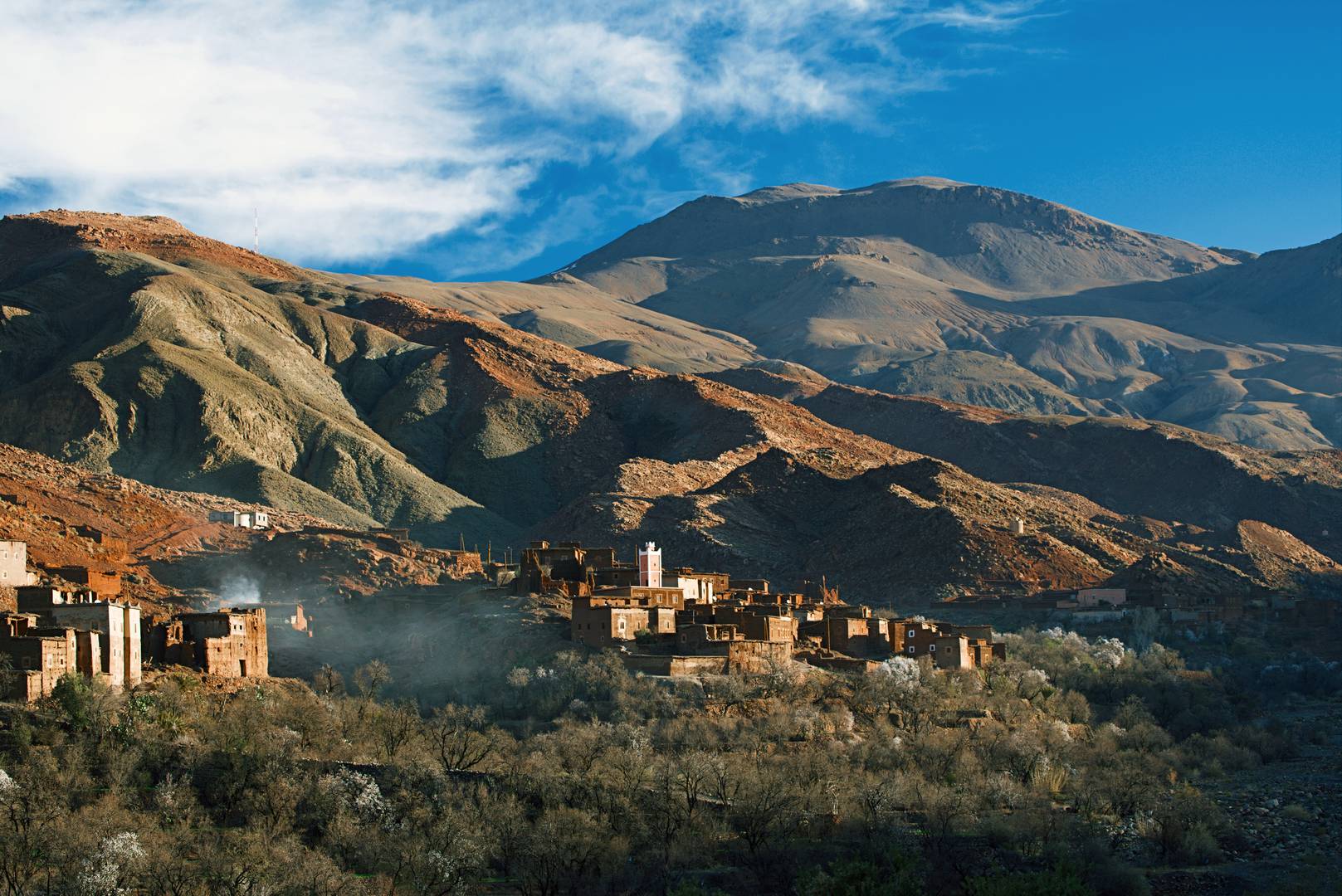
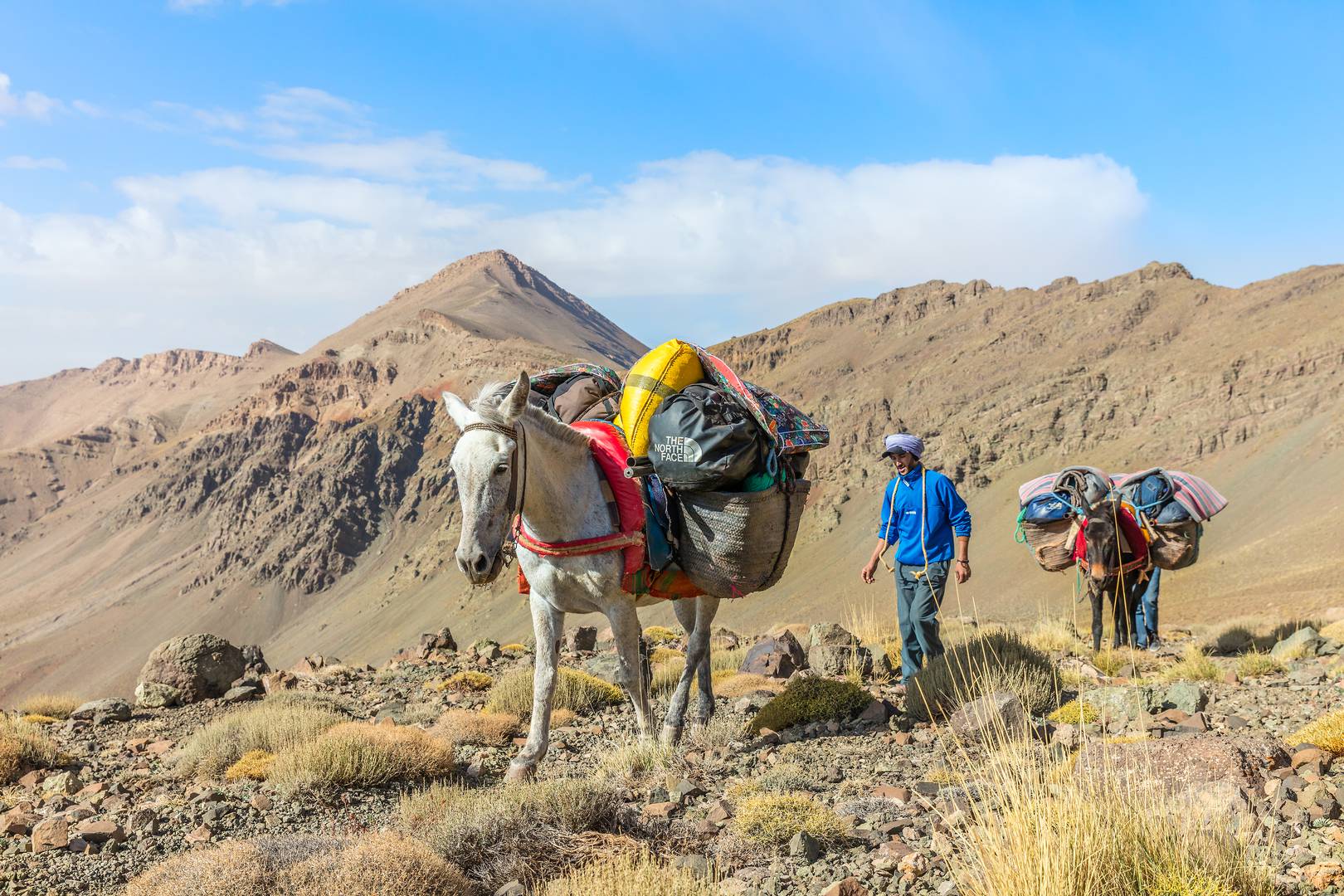
In the morning you go 1 ½ hour by bus to Demnate, a Berber town, on the way up the slopes of the Middle Atlas. Straight from there you go by road taxi, some 6 km to Imi-n-Ifri (Grotto's mouth in Berber) a natural bridge over a gorge. You turn left over the bridge and at walking distance is the hotel where you will spend two nights. The first day you will trek in the surrounding for some 3-4 hours and visit a village famous for its pottery. Next day you will go by minibus to Iouardidene. Just beside the village you can se dinosaur footprints dating from the mid Jurassic period, just some 170 million years ago. Here our local guide will be waiting for us with some mules (you have to get used to them) to take us through the "Vallée de raisins", the grape valley following the irrigation canal for some 2 ½ hours. This is an extremely fertile part of Morocco producing the best olive oil of the country. Between the olive, the almond, the quince and the pomegranate trees the grapevine is growing and on the ground squash, corn and other vegetables. In Tirika we stop to have lunch with one of the families living in this valley. At the end of the valley we will continue along the river into the gorge between two high mountains as far as we can with the mules and then only by foot. On our way back we will pass some three villages. All together you will trek for some 6-7 hours.

Day 4

In the morning you will go by minibus to "Cascades d'Ouzoud" where the Oued (river) Ouzoud drops 110 meters into the canyon of Oued el Abid, the highest water fall in Morocco. This is a touristic place, but so beautiful, that it is worth getting here. You can climb down the cliffs and even swim at the bottom of the water fall. After this visit you continue to Beni Mellal and from there you take the bus to Fés and check-in at the groups own riad (a rebuilt family house), in the old medina (walled town centre). There will be time for a small walk around the quarters and time to practice your sense of direction.

Day 5-6

Féz was founded shortly after the Arabs started to spread to across North Africa and Spain. It started as a modest Berber town around 800 AD in a very fertile area but became with time the spiritual and cultural center of the country and it has retained until today its moral status. Arab families from Kairouan (todays Tunisia) created the Kairaouine quarter where you find the world's first university where the elite of Morocco still send there kids to study. Its population is around 1 million and the town is divided into three parts Fez el-Bali (the core of the medina) in the east; Fez el-Jdid in the centre and the Ville Nouvelle built by the French and where you find all the administration.

Two whole days you have to explore this old market town, one with a local guide and the other to stroll on your own. Old fashioned dye-houses for leather, coppersmith shops, small boutiques in the small medina and Al-Kairaouine, Africa's biggest mosque and university are all thing you have time to see.

Options;

  • The Kairaouine Mosque & University; a complex containing the largest mosque (can take 20 000 people) in Africa and possibly the oldest university in the world; established in 859.
  • Medersa is the name for a theological college and there are several of them in Fez; sometime in connection with a mosque and sometimes not: Medersa as-Seffarine; Medersa el-Attarine - a separate annexe to the Kairaouine Mosque ; Medersa Bou Anania - the finest of them. You can visit the medersas but not the mosques as a non-Muslim.
  • All kind of Moroccan art and craft is still produced in Fez in different districts. You can visit the Chouwara tanneries where they still dye skin in outdoor pits in the leather district and then move further to the wood carving district and the district for metal works or pottery.
  • Now if you want it all (and exclusively chosen) you can visit a museum: Nejjarine Museum of Wooden Arts & Crafts - a restored funduq for traveling merchants or the Batha Museum - also showing wooden arts but also embroideries; carpets and instruments
  • In Fez el-Jdid you have the Jewish quarter Mellah and Royal Palace (that you cannot enter), the Habarim Synagogue; the Ibn Danan Synagogue both open to visit and the Jewish cemetery with its white tombs.

Last night you take the bus to Azrou, a town in middle Atlas Mountains.

Day 7-9

Azrou is a Berber town (with a population of 50 000) in the Middle Atlas. The town is also situated inside the National park of Ifrane; ideal for trekking in the beautiful pine and cedar forests. A museum of the middle Atlas is under construction (for Berber culture) and there is an interesting exhibition in the building of the project of the National Park

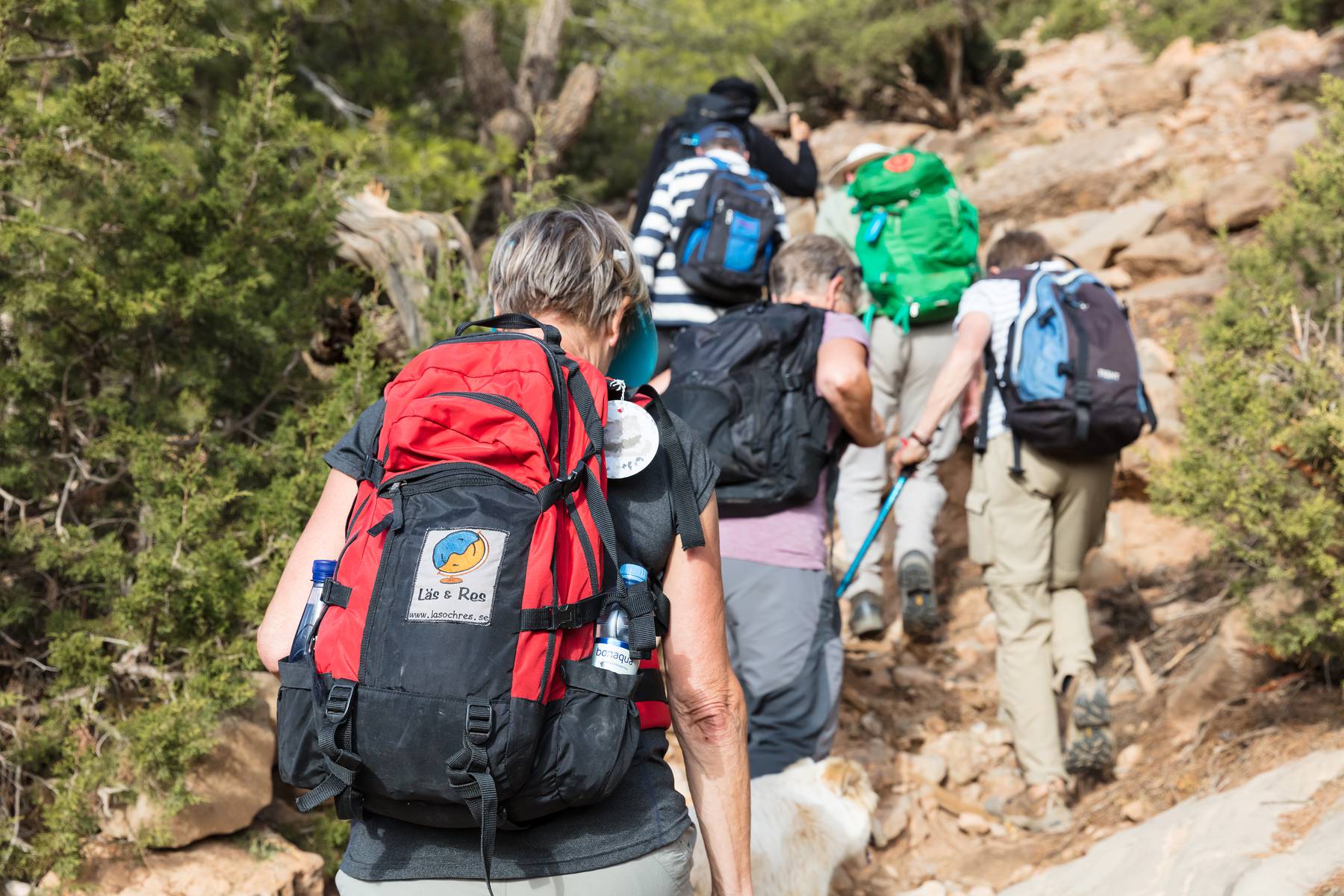
During three days you trek in beautiful landscape with large cedar forests. Not at all like you imagine Morocco, more like an alpine landscape. First day you trek some 7-8 hours to Lac Afenouir, a lake with a rich bird life where you spend the night with Berber nomads in one of their longhouses. Next day you continue trekking some 4-5 hours to Aïn Leuh, a small Berber community where you stay in a Berber hostel. They have original Berber tents in the garden and a small Berber exposition in the dining room not to mention the beauty of their Berber saloon. Last day you trek some 4-5 hours to Zaouia d'Ifrane, close to a mountain where a river is running down the mountain behind the village creating a strange landscape. From there you go by transport to the source of the river Oum Er-Rbia, where you have dinner in the small local restaurants beside the river. You can bathe below the water-fall. Last night you go back to the same hotel in Azrou.

Day 10

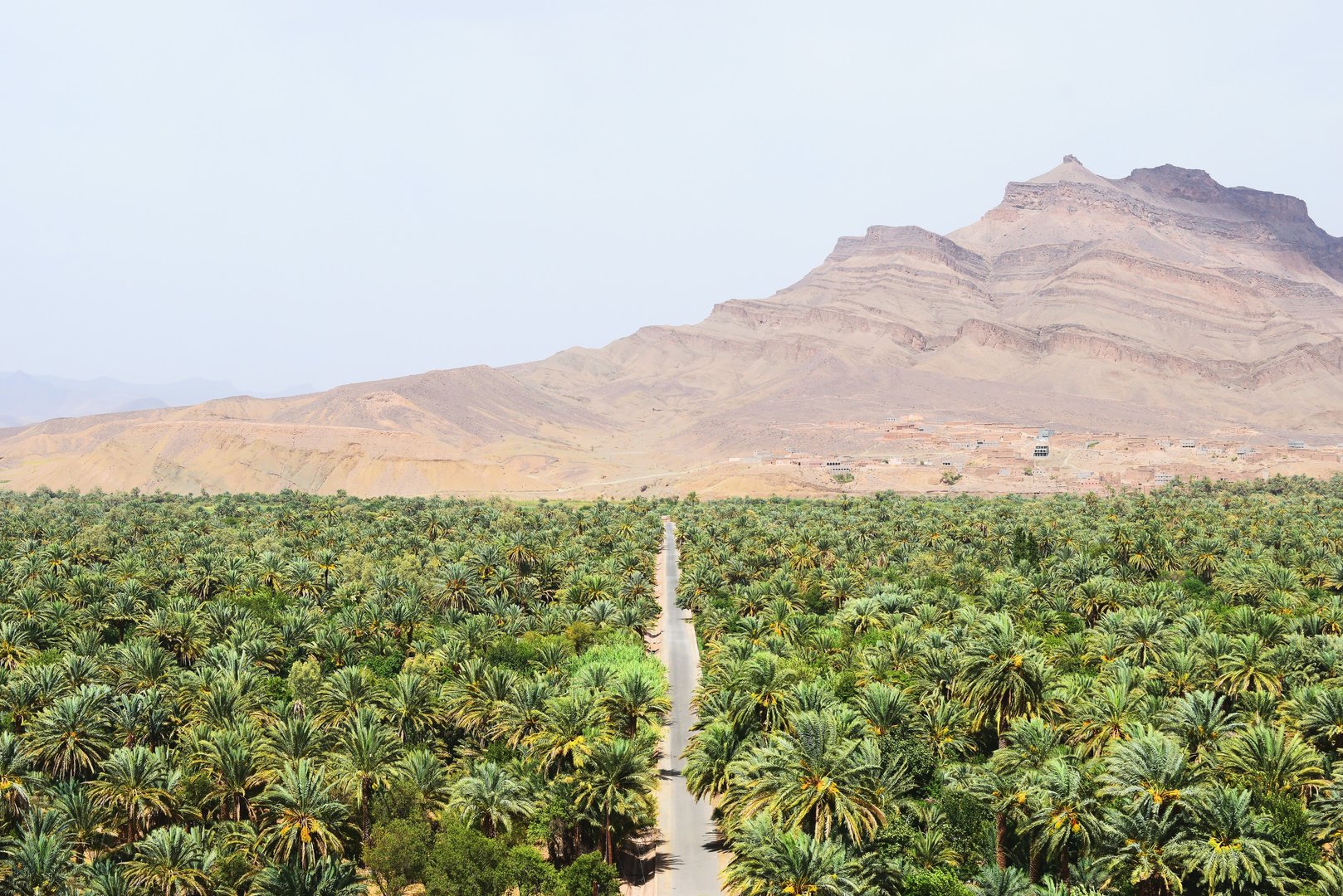
You travel the whole day by bus, with the exceptions for meal breaks, to Merzouga, an outpost in the desert. The road over the mountains is fantastic. First a green mountain landscape with spots of snow that changes into a desert landscape with breathtaking mountain shapes and green oasis.

Merzouga and Hassi Labied are tiny villages just at the border of the Erg Chebbi (erg means sand dune) an area of constantly shape-shifting sand dunes not far from the Algerian border. Between the villages a string of hotels flank the western side of Erg Chebbi, and that is all there is; nothing but sand….

Day 11-12

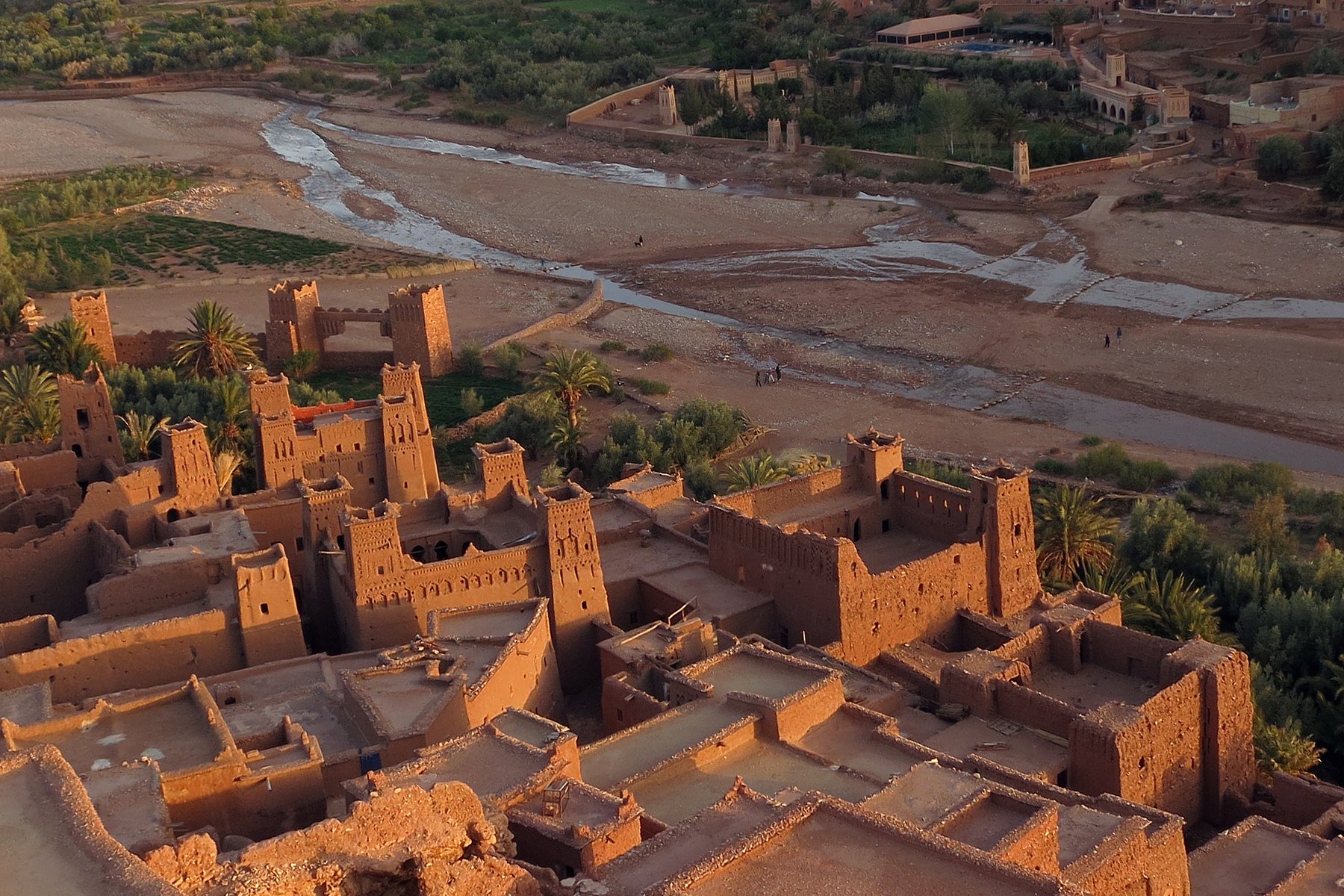
You leave the Kasbah (a kind of desert fort) you spent the night in and take a dromedary ride to a Bedouin camp in the desert. Here you sleep under the sky and in the silence. Before that we have time to visit the surrounding plantations where some 15 families cooperate in a sophisticated irrigation system taking water out of the sand dunes. When you get back, you catch your breath and look for fossils in the mountains.

Day 13-14

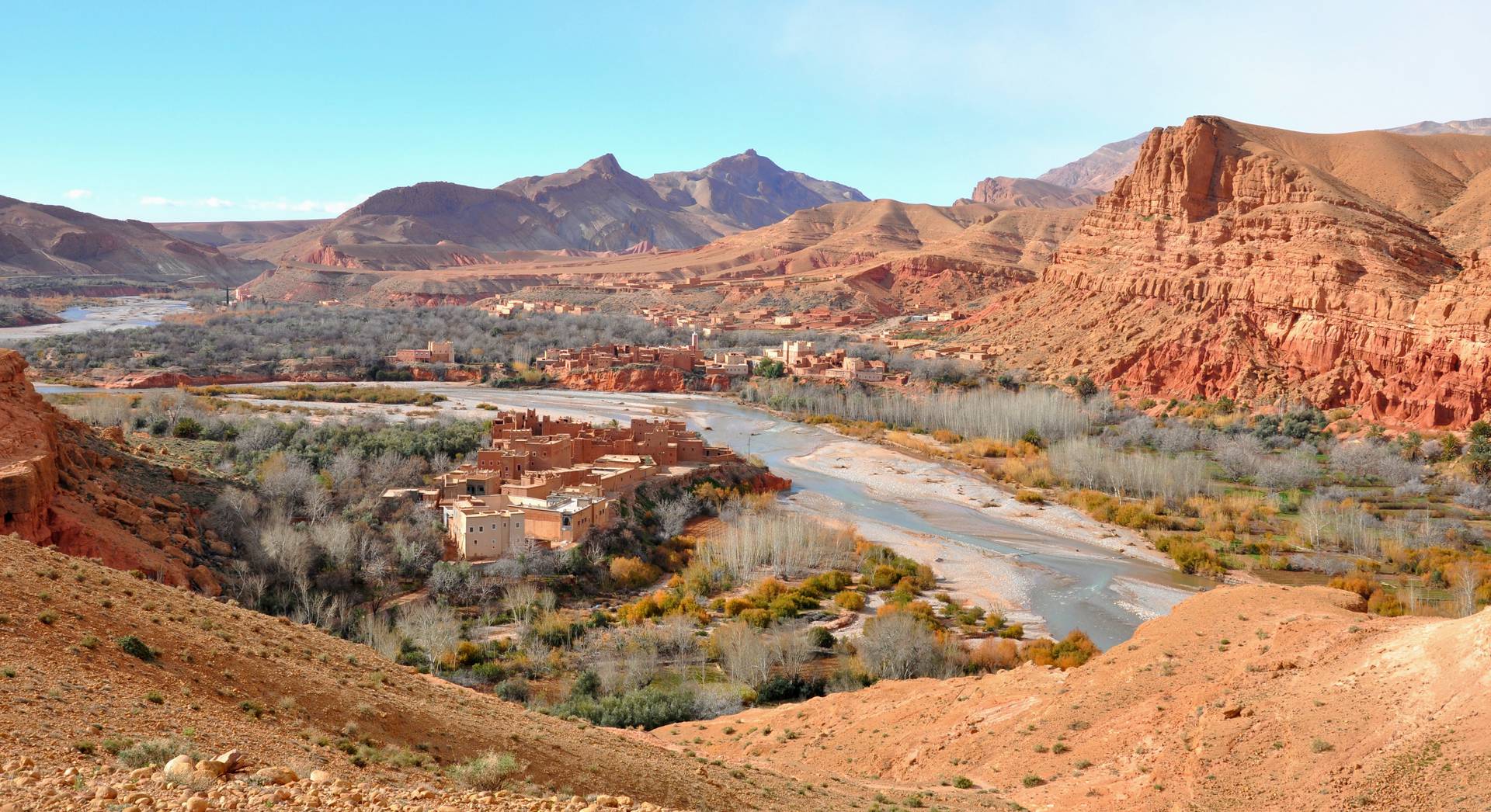
From Merzouga we go by bus to Boumalne de Dadès and up to our hotel in Dadés Gorge, a deep ravine where the river Oued Dadès runs down. There you have two days to explore the surroundings with ravines where you can trek for hours, find well-springs, admire fantastic mountain formations end explore caverns where the population (mostly Berbers) used to hide during uprising against the colonial power.

Day 15-16

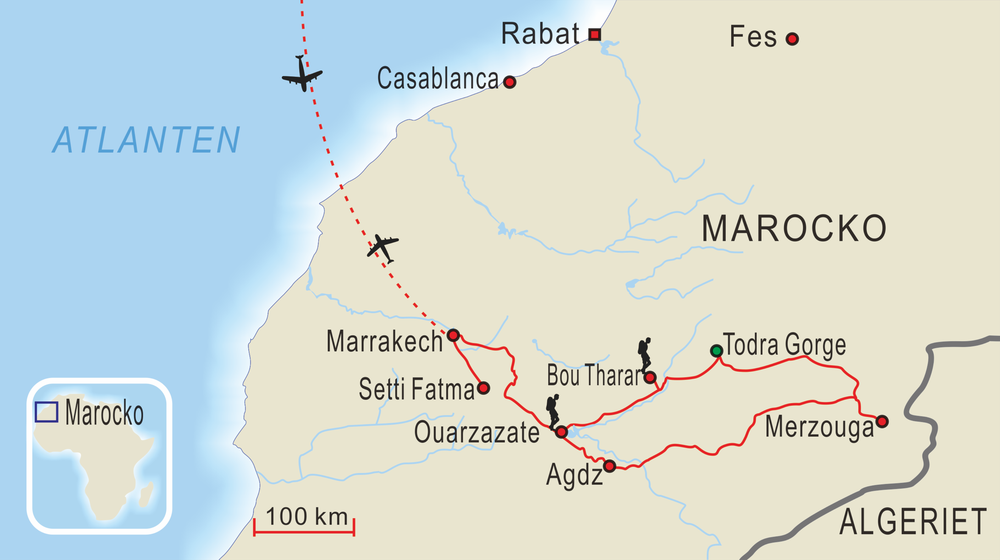
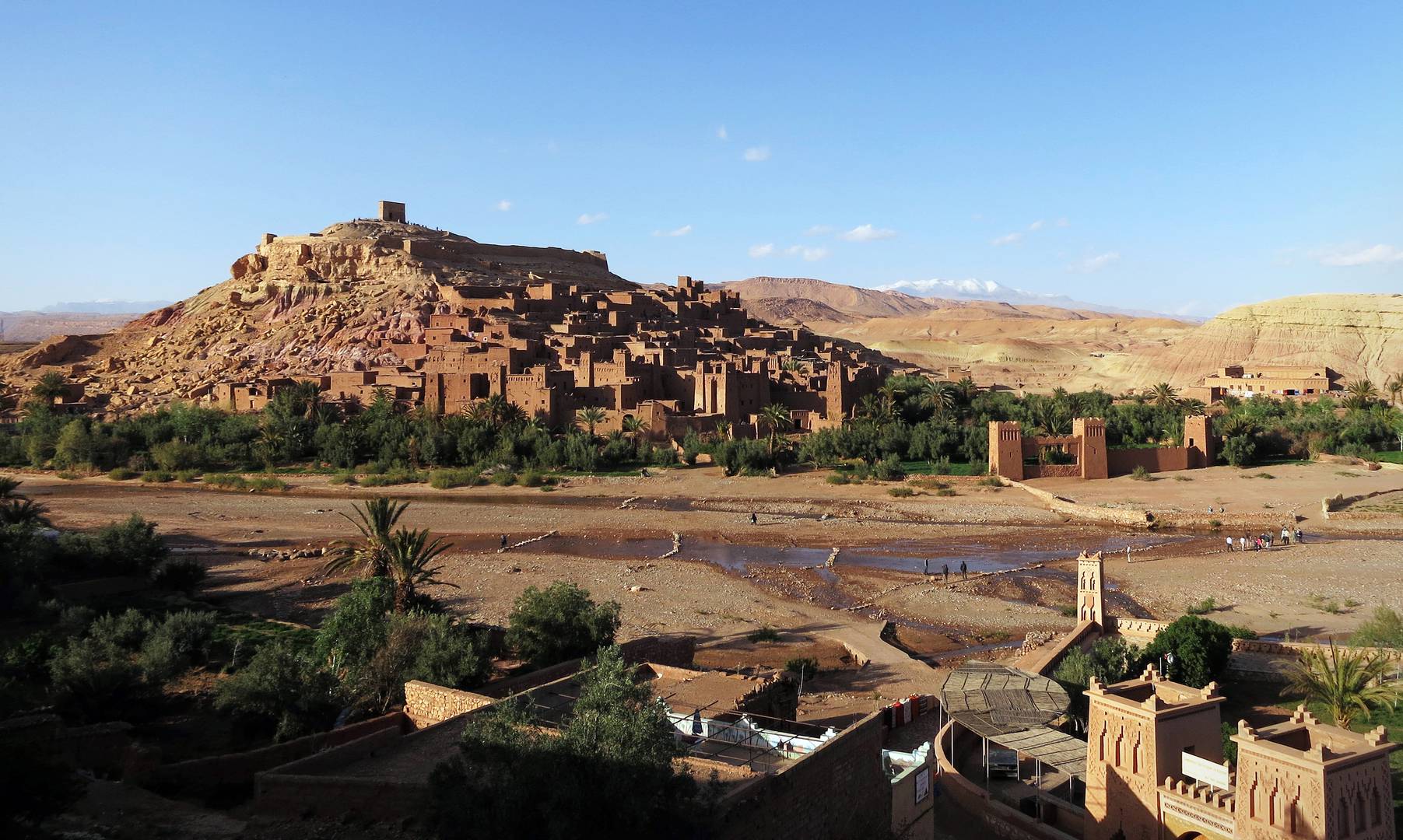
Now you travel west all the way to Ouarzazate. And from there you go by taxi to the village Tajda, where you stay two and two, with families in the countryside. Tajda is a small village about 5 km from Ouarzazate with some 5000 habitants, mostly farmers.

You take part in their everyday chores and help out with what you can. There is an English-speaking interpreter in every family.

Day 17-20

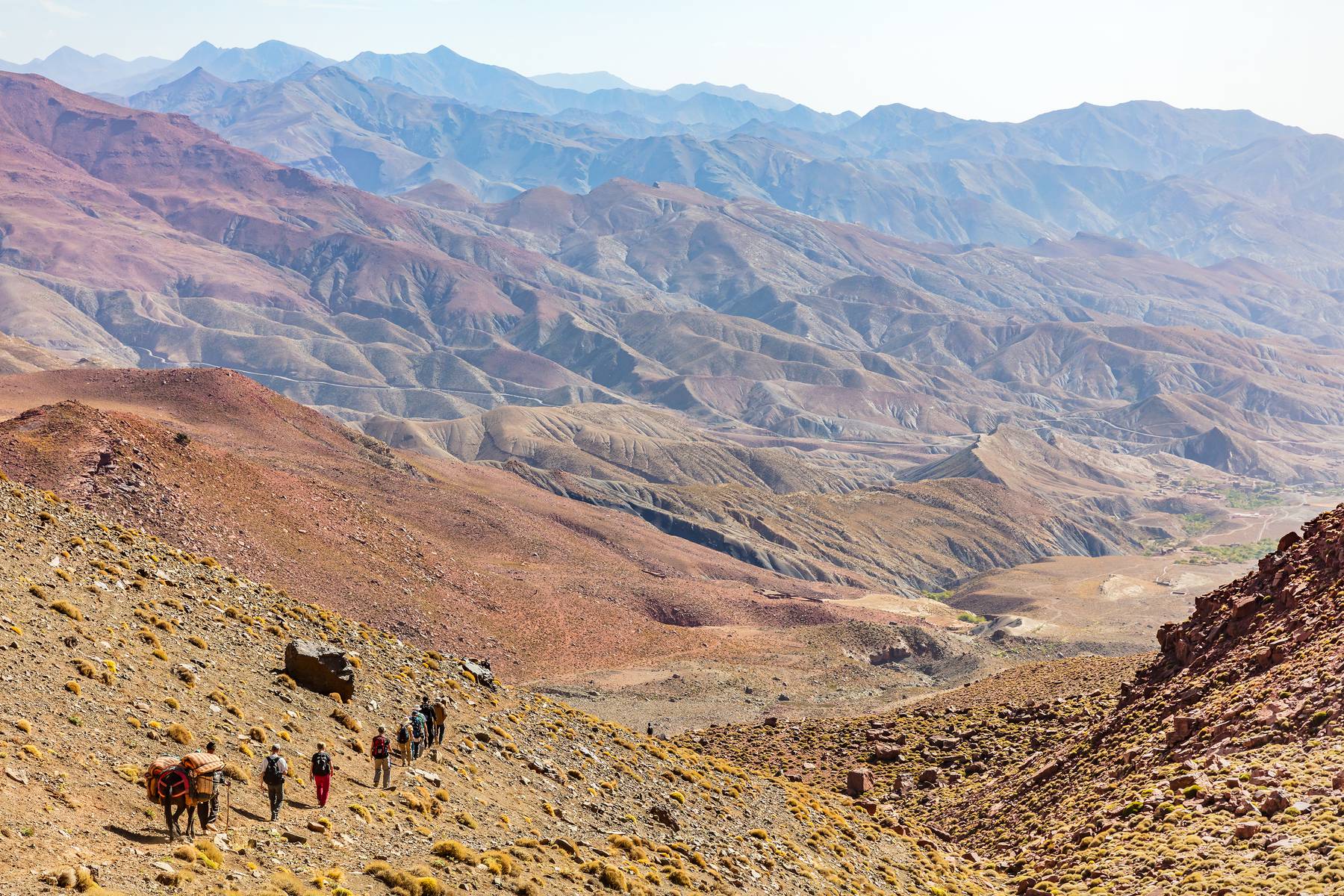
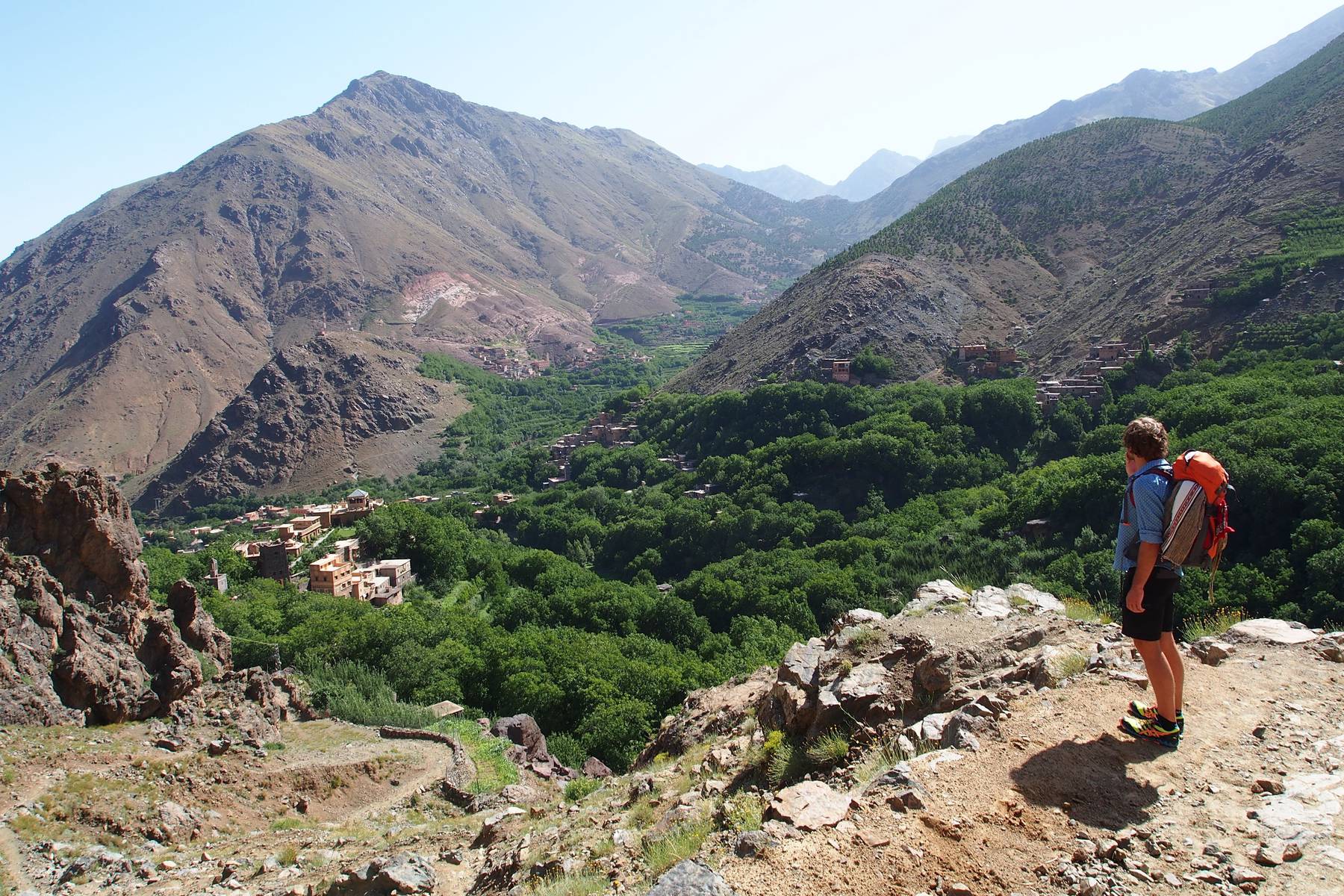
Early morning you go by minibus and Landover to Tighremt n'Ouazdidene situated on the eastern slopes of the High Atlas area. In fact we follow the road towards Marrakech but only up to Agouim. Then we turn left towards the village Sour (below Taskka n'Zat - 3912 m) and some km further to Souk el Had where we change to Landover's for the last part up to Tighremt n'Ouazdidene (2063 m). From there you trek during three days to Setti-Fatma, in the high Atlas Mountains. Here are no roads for cars; people go by foot or with mules. OBS! This part of the tour has some more physically demanding passages.

OBS! In Souk el Had a road-taxi will meet you and transport your luggage to Setti-Fatma. You only bring your small backpack with what is necessary for the trek.
If someone is sick or for some reason do not think he or she is capable of doing this two days trek over the mountains (or cannot ride on a mule) he or she can go with this taxi straight to Setti-Fatma and stay there for three nights at our hotel. An extra guide/interpreter will come with the taxi and accompany you up to Setti-Fatma if this is decided at least one day in advance. (The three nights in our hotel and the interpreter during transport is included in the price). If you want to hire the guide/interpreter during your stay in Setti-Fatma it is on your own expense. Ask our tour leader what is a suitable price.

We walk up to Tizi n'Tigremt (3 674 m).This is the hard part and it takes about 4 hours. But you can sit on your mule all the way up. Then we continue between the mountain peaks Adrar Mighlain (3 607 m) and Adrar Afra (3 620 m) to Assif n'Oufra and we join the river that floats all the way to Setti-Fatma. On the road we meet goatherds, the only people living up here. At Tiz de Heine, you will follow a path called Bookshot. First night you stay overnight in tents, second night in a village called Douar Amenzal. You will not meet any tourists on this path.

OBS! The first two days you will cover large parts of the trek riding on mules (one per person) as the distance is to long for most to walk all the way. The third day we trek some 4 hours to Tamatart, another small village and another 3 hours down to Setti-Fatma.

Day 21

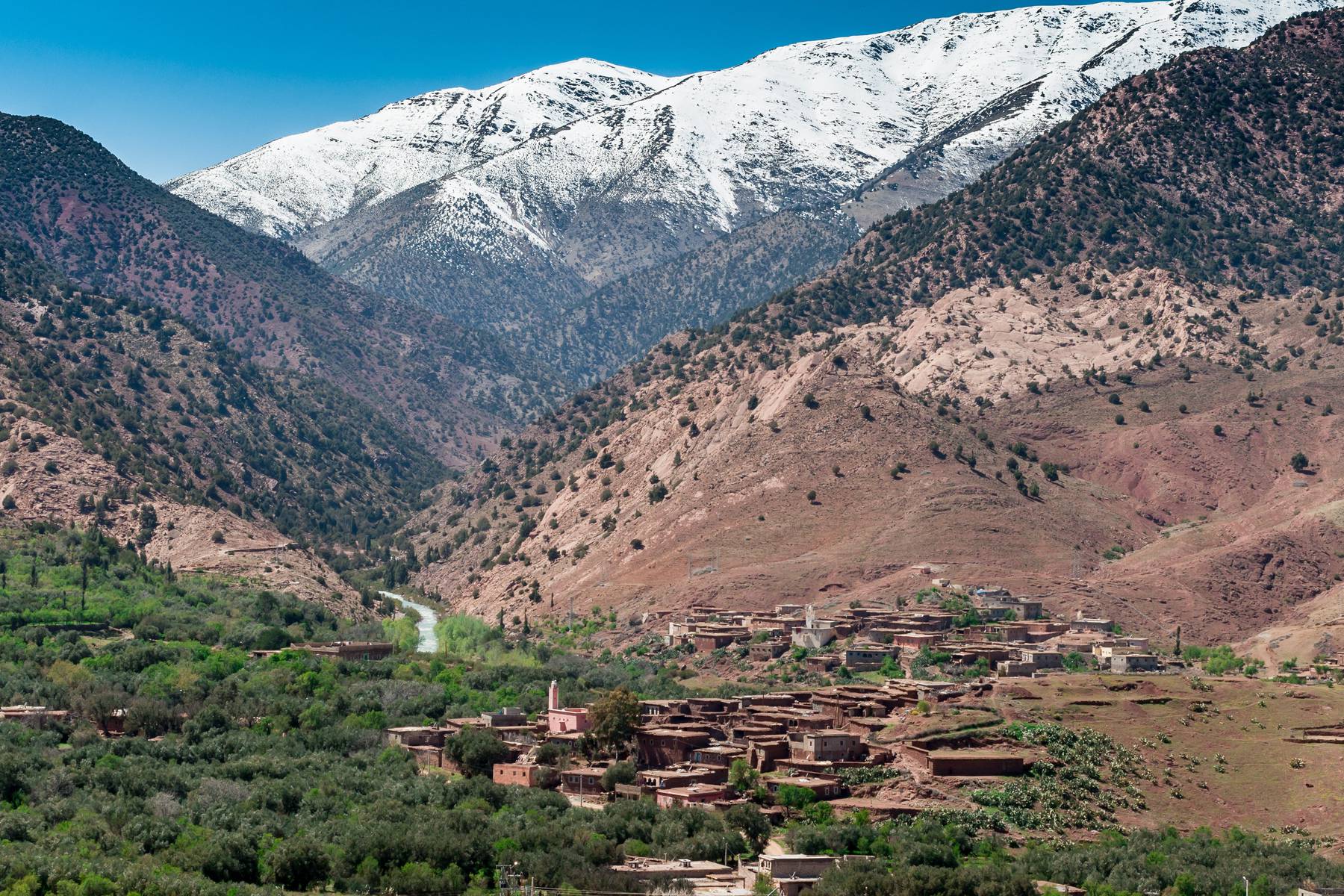
Next day in Setti-Fatma, a wonderful mountain village, you can climb the mountain along the seven waterfalls. Setti-Fatma is a small village in a canyon beneath the High Atlas Mountains at the end of the Ourika Valley road. Close to the river running through the town there is plenty of nice restaurants. From here you can make short excursion to the waterfalls (there are 7). In fact when Marrakesh is to hot their inhabitants invades Setti-Fatma - so what you will meet is Moroccan tourists (in their own country). Some days there is even traffic jam in this small town, especially after a rain-fall when everybody wants to leave at the same time. In the afternoon you continue by bus down to Marrakesh.

Marrakesh, a former caravan outpost became a city in 1062 when an Almoravid Berber leader and his wife built ramparts around the encampment. They established the town's underground irrigation system and also the significant pink mud-brick architecture. The town lost its importance twice in history when rulers preferred Meknes or Fez as royal towns and in the end Marrakesh slid into despair. In 1912 the French protectorate granted the Pasha Glaoui the run of southern Morocco and several Medina palaces including the one of Marrakesh. They built for themselves instead a Ville Nouvelle outside each medina. After the independence Marrakesh had no clear role in the nation. But hippies and spiritual seekers built the city's mystique in the 1960s along with famous visitors as Beatles, Rolling Stones and Led Zeppelin. In the 1990s with low-cost airlines Marrakesh became the city of tourism.

Options;

  • Djemaa El-Fna is inevitable. It is Marrakesh's main square where everybody will end up eating in those mobile restaurants covering the square every night. Snail-soup seller No 1 is a favorite. And entertainment of all kind is available.
  • The Koutoubia Mosque. The Koutoubia minaret built in the 12-century, is a 70 meter high tower and a good landmark if you get lost. You can visit the garden but a non-Muslim can not enter the mosque.
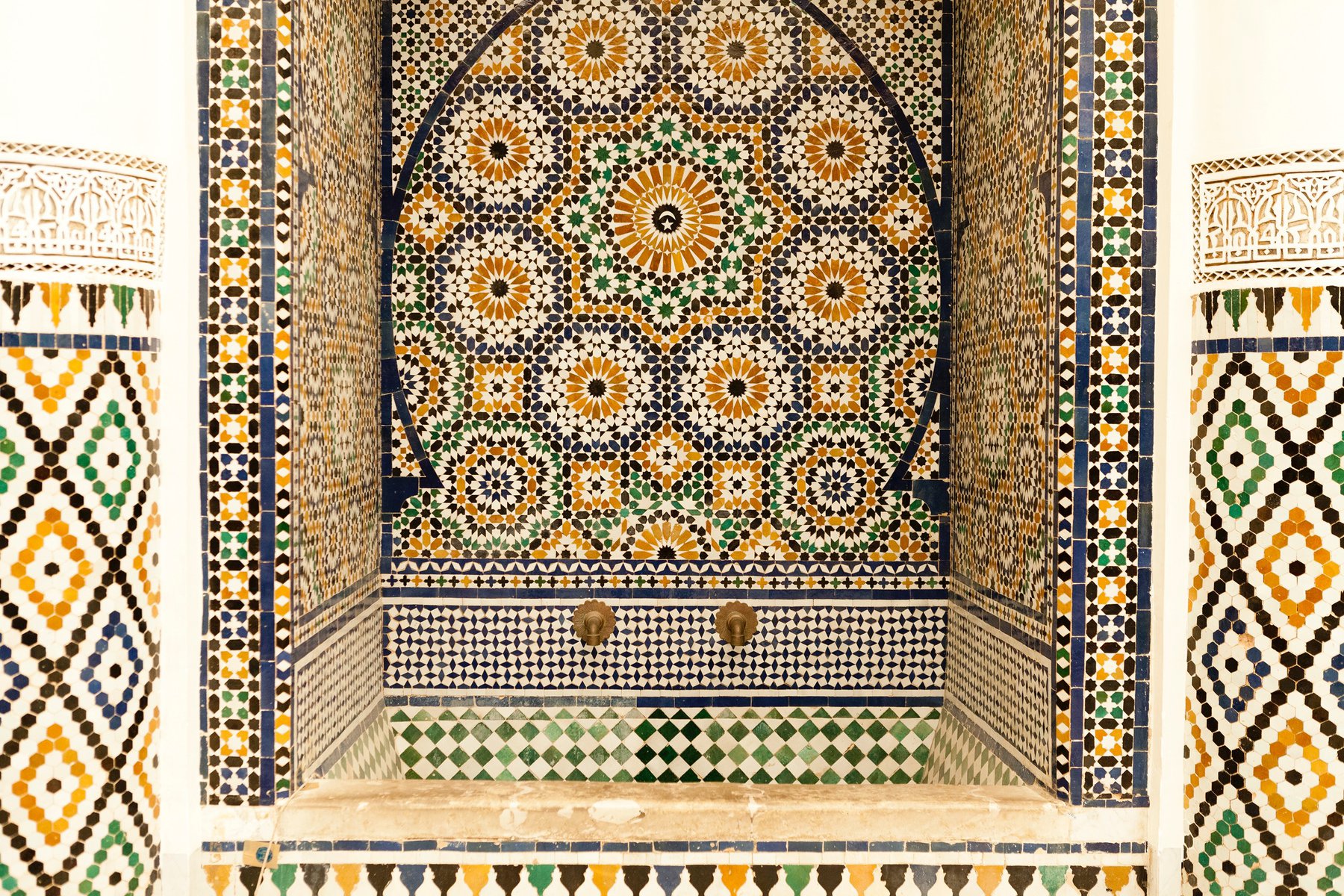
  • Ali ben Youssef Medersa was once the largest Koranic learning center in North Africa, but lost the competition with Medersa Bou Inania in Fez. The building has carved cedar cupolas and wooden balconies and is really beautiful.
  • Bahia Palace is a palace that has been embellished several times, with inlaid woodwork ceilings, amongst other. But only a small part of its 150 rooms are open to the public.
  • Badi Palace was formerly a glorious palace until it was looted. (El-Badi means "the incomparable.) But it is still beautiful and has some special attractions such as the Koutoubia minbar, a prayer pulpit with cedar wood steps.
  • Saadian Tombs near the Kasbah mosque is the tomb of a saadian sultan who spent an enormous amount of money on his tomb importing Italian marble etc.
  • Musée de Marrakech is in the Mnebhi Palace and contains rotating traditional arts displays but also occasional concerts.
  • Jardin Majorelle & Museum of Islamic Art. Thanks to Yves Saint Laurent, his partner Pierre Bergère and the Marrakshi botanist Abderrazak Benchaâbane, the garden contains over 300 plants species from all over the world. Yves Saint Laurent gave the entire garden to Marrakesh and his ashes was scattered in the garden when he died in June 2008

Day 22

The journey is finished and there is a direct flight home the very same day, with Norwegian, from Menara Airport. Or why not add some more days in our hotel and explore Marrakesh on your own. If you wish to go to Essaouira, the small fishing village on the coast, where we go in our ordinary Moroccan tour - just tell us in advance, or our tour leader during the tour, and we will book some extra days for you on the coast. At this point you are so familiar with traveling in Morocco so you no longer need a tour leader.